Media and politics have always shared a close relationship. In every democracy, the media serves as an important channel through which citizens receive information about government decisions, public policies, elections, and national issues. At the same time, political leaders rely on the media to communicate with the public, explain their policies, and engage with voters.
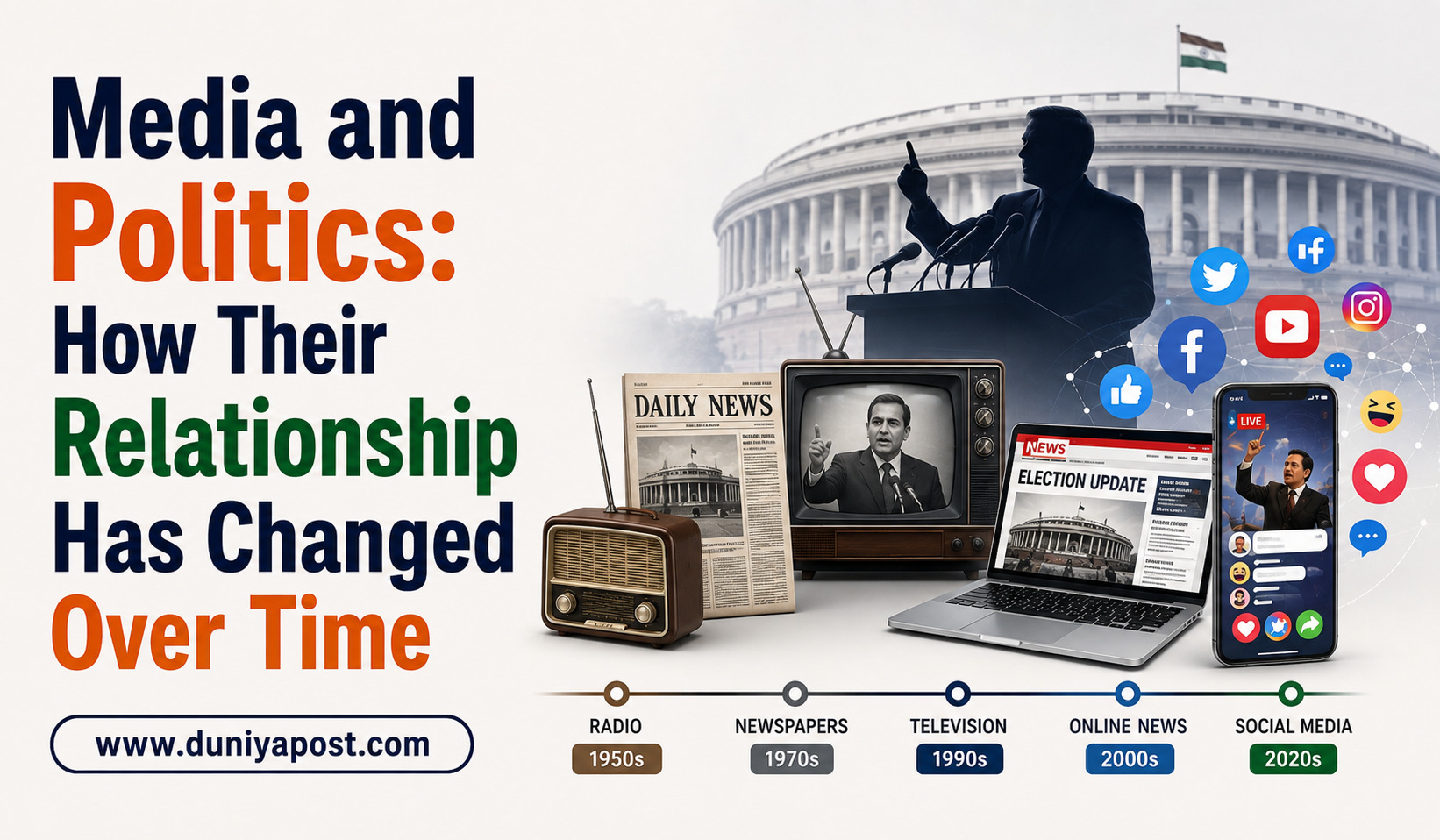
Over the years, this relationship has changed significantly. Traditional newspapers, radio, and television once dominated political communication, but the rise of the internet and social media has transformed how information is created, shared, and consumed. News now travels within seconds, political debates take place across digital platforms, and citizens have more opportunities than ever to participate in public discussions.
These changes have created new opportunities for greater public engagement while also introducing challenges such as misinformation, political polarization, and the rapid spread of unverified content. Understanding how the relationship between media and politics has evolved helps explain the changing nature of democracy in the digital age.
The Traditional Role of Media in Politics
Before the digital revolution, newspapers, magazines, radio, and television were the primary sources of political information. These platforms informed citizens about elections, parliamentary debates, government policies, and national developments.
Journalists acted as intermediaries between political leaders and the public by reporting events, conducting interviews, and investigating issues of public interest. Editorials and opinion columns encouraged discussion on important political topics, helping people understand different viewpoints before forming their own opinions.
For decades, traditional media played a central role in promoting political awareness and informing voters about developments affecting the country.
Media as the Fourth Pillar of Democracy
The media is often described as the “fourth pillar of democracy” because it contributes to transparency and public accountability. By reporting on government activities, legislative debates, and public administration, the media helps citizens stay informed about how their country is governed.
Investigative journalism has, at various times, brought attention to issues involving governance, public administration, environmental concerns, and social challenges. Public reporting encourages debate, raises awareness, and allows citizens to evaluate the performance of elected representatives.
An informed society is better equipped to participate meaningfully in democratic processes, making responsible journalism an important part of a healthy democracy.
The Rise of Television and 24-Hour News
The introduction of television transformed political communication by making news more immediate and visually engaging. Political speeches, parliamentary proceedings, election campaigns, and debates became accessible to millions of viewers in real time.
The emergence of 24-hour news channels further accelerated the pace of political reporting. Continuous coverage enabled citizens to follow major developments throughout the day rather than waiting for the next morning’s newspaper.
Television also changed election campaigns by increasing the importance of public appearances, televised interviews, and live debates, making political communication more direct and widespread.
The Digital Revolution Changed Everything
The internet marked one of the biggest turning points in the relationship between media and politics. Online news platforms made political information available instantly, allowing readers to access updates at any time from almost anywhere.
Digital journalism expanded the number of voices participating in political discussions. Independent news websites, policy platforms, and online publications began covering issues from different perspectives, giving citizens access to a broader range of information.
The speed of digital publishing also changed the way political news was reported, with real-time updates becoming the norm during elections, parliamentary sessions, and major government announcements.
Social Media and Political Communication
Social media has fundamentally changed how politicians, political parties, journalists, and citizens communicate.
Unlike traditional media, where information generally flowed in one direction, social media allows immediate interaction. Political leaders can share updates directly with the public, while citizens can respond, ask questions, and participate in discussions.
Platforms such as X (formerly Twitter), Facebook, Instagram, YouTube, and other digital networks have become important spaces for campaign messages, policy announcements, live events, and public engagement.
This direct communication has reduced the distance between political leaders and citizens, making political conversations more immediate and interactive.
Citizens Have Become Content Creators
One of the biggest changes brought by digital media is that citizens are no longer only consumers of political news—they also create and share it.
Videos, photographs, blogs, podcasts, and social media posts allow individuals to express opinions, report local issues, and participate in national conversations.
Citizen journalism has expanded public participation, especially during elections, protests, natural disasters, and community events. It has enabled voices from different regions and backgrounds to contribute to public debate.
However, this increased participation also highlights the importance of verifying information before sharing it widely.
Media’s Role During Elections
Election campaigns have evolved significantly with changes in media technology.
Traditional campaign methods such as public rallies, newspaper advertisements, and television broadcasts now work alongside digital outreach, online debates, and social media engagement.
Political parties use multiple communication channels to explain policies, interact with voters, and encourage participation in elections. News organizations provide coverage of campaign events, interviews, opinion polls, and election-related developments, helping citizens stay informed.
Responsible election reporting plays an important role in ensuring that voters have access to diverse viewpoints before casting their votes.
The Challenge of Misinformation
While digital media has made information more accessible, it has also increased the spread of misinformation.
False or misleading content can circulate rapidly across online platforms, sometimes reaching millions of people before corrections become available. Manipulated images, edited videos, fake headlines, and AI-generated content can make it difficult for users to distinguish between verified information and misinformation.
This challenge has increased the importance of fact-checking, responsible journalism, and media literacy. News organizations, technology companies, independent fact-checkers, and citizens all play a role in reducing the spread of inaccurate information.
Artificial Intelligence and Political Media
Artificial intelligence is beginning to reshape political communication in new ways.
AI tools can assist with content creation, language translation, audience analysis, and information management. News organizations are using AI to organize data, summarize reports, and improve newsroom efficiency, while political campaigns use it to better understand public concerns and enhance voter outreach.
However, AI also introduces challenges, particularly with deepfakes and synthetic media. These technologies can create realistic-looking images, audio, or videos that may mislead audiences if used irresponsibly.
As AI becomes more common, ethical standards and transparency will play an increasingly important role in maintaining trust.
The Importance of Responsible Journalism
In today’s fast-moving information environment, responsible journalism remains essential.
Accurate reporting, balanced analysis, careful fact-checking, and respect for ethical standards help maintain public confidence in the media. Professional journalism provides context, verifies information, and encourages informed public discussion rather than simply delivering breaking news.
A healthy democracy depends on citizens having access to reliable information from credible sources so they can make informed decisions on public issues.
The Future of Media and Politics
The relationship between media and politics will continue to evolve as technology advances.
Artificial intelligence, digital broadcasting, podcasts, interactive news platforms, virtual reality, and personalized content are expected to influence how political information is produced and consumed. Citizens will have greater access to information than ever before, but they will also need stronger critical thinking skills to evaluate its accuracy.
Governments, media organizations, technology companies, educational institutions, and civil society will all play important roles in promoting transparency, digital literacy, and responsible communication.
The future of political communication will depend not only on technological innovation but also on maintaining public trust and democratic values.
Conclusion
The relationship between media and politics has undergone a remarkable transformation over the years. From newspapers and radio to television, online journalism, social media, and artificial intelligence, each technological advancement has changed how political information reaches the public.
While these developments have expanded access to information and increased citizen participation, they have also created new challenges related to misinformation, digital ethics, and responsible communication. Balancing speed with accuracy and innovation with accountability has become more important than ever.
Ultimately, media and politics will continue to shape one another. A free, responsible, and independent media helps citizens stay informed, encourages public debate, and strengthens democratic institutions. As technology continues to evolve, maintaining trust, transparency, and factual reporting will remain essential for ensuring that the relationship between media and politics supports an informed and engaged society.