
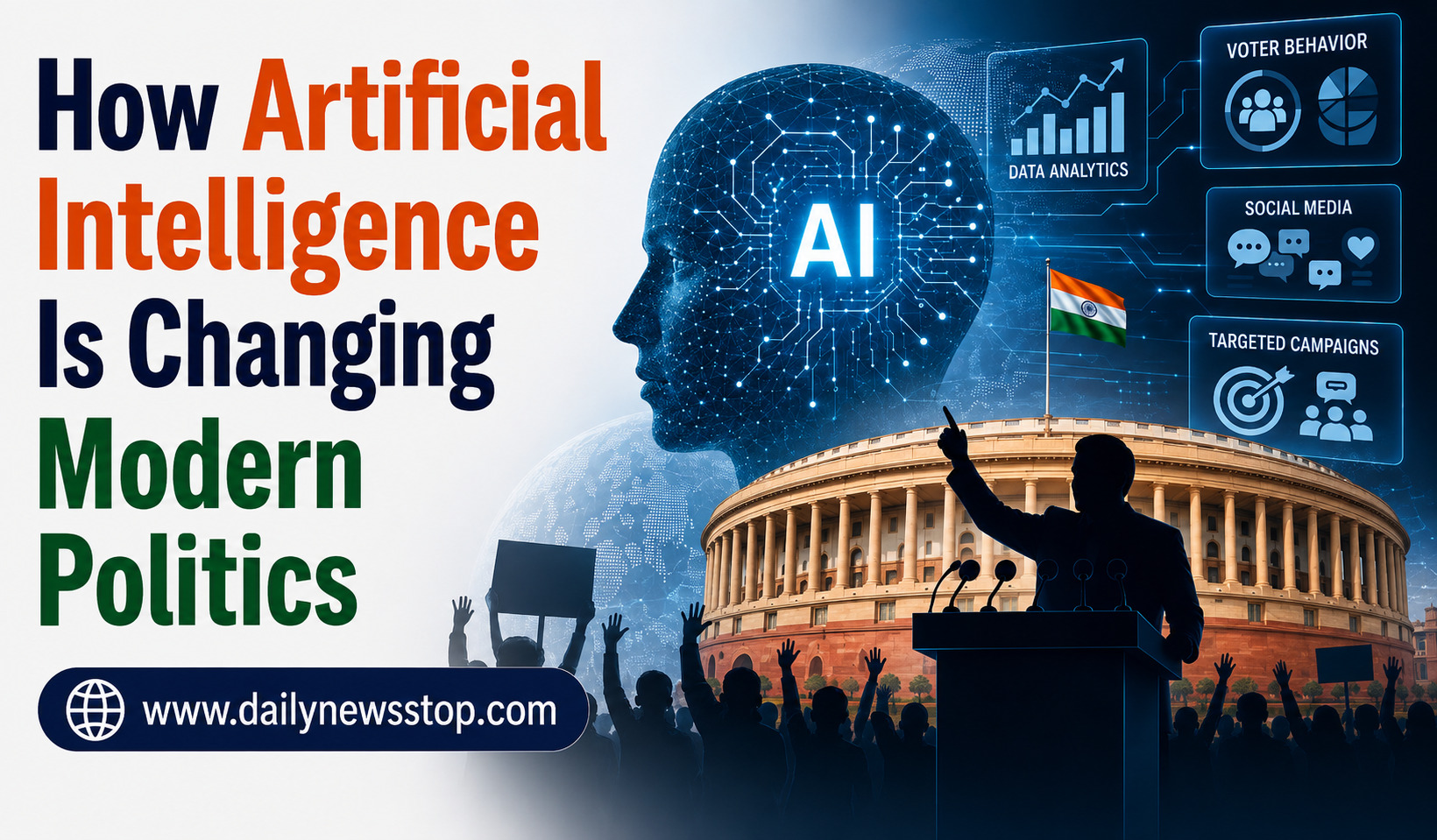
Artificial Intelligence (AI) is transforming almost every sector, from healthcare and education to finance and entertainment. Politics is no exception. Around the world, election campaigns are increasingly using AI to understand voters, plan strategies, create campaign content, and communicate with the public more effectively.
In recent years, AI has become an important tool for political parties and candidates. It can analyze vast amounts of data, identify voter concerns, predict trends, and help campaign teams make informed decisions. At the same time, the growing use of AI has raised serious questions about misinformation, deepfakes, privacy, and the ethical use of technology during elections.
As democracies become more digital, understanding the role of AI in election campaigns is becoming increasingly important. While AI offers opportunities to improve communication and voter engagement, its use also requires transparency, accountability, and responsible regulation.
What Is AI in Election Campaigns?
AI in election campaigns refers to the use of artificial intelligence technologies to support political communication, campaign planning, voter outreach, and decision-making.
Unlike traditional campaign methods that relied heavily on surveys, public meetings, and television advertisements, AI enables campaign teams to analyze enormous volumes of information in real time. By processing data from public sources, opinion polls, demographic trends, and digital interactions, AI can help identify issues that matter most to different groups of voters.
The technology does not replace political leaders or campaign workers. Instead, it provides insights that help campaigns make more informed decisions and improve their communication strategies.
Understanding Voter Preferences
One of AI’s most significant contributions to election campaigns is its ability to analyze voter behaviour and public opinion.
Campaign teams use AI-powered tools to study trends across regions, age groups, occupations, and social interests. This helps them understand which issues are receiving the most public attention and where additional outreach may be needed.
For example, voters in one region may prioritize employment opportunities, while another region may be more concerned about agriculture, education, or infrastructure. AI can help identify these patterns, allowing campaigns to address local concerns more effectively.
Personalized Political Communication
Modern election campaigns increasingly rely on personalized communication. AI allows campaigns to deliver messages that are more relevant to different audiences without changing the overall political agenda.
Instead of broadcasting the same message to everyone, campaigns can create content that highlights issues of greater interest to specific communities or demographic groups. This makes political communication more targeted and efficient.
However, personalized communication must be used responsibly. Transparency and respect for voter privacy remain essential to maintaining public trust in democratic processes.
AI Helps Create Campaign Content
Artificial intelligence has also changed the way campaign content is produced. AI tools can assist in drafting speeches, writing social media posts, creating campaign slogans, designing graphics, translating content into multiple languages, and summarizing policy documents.
These technologies allow campaign teams to produce content more quickly while reaching diverse audiences across different regions.
Although AI improves efficiency, human oversight remains important to ensure that campaign messages are accurate, respectful, and consistent with the candidate’s policies.
Chatbots and Digital Voter Engagement
Many political campaigns now use AI-powered chatbots to answer common questions from voters. These virtual assistants can provide information about party manifestos, campaign events, government policies, and voting procedures.
Since chatbots operate throughout the day, they help campaigns engage with large numbers of citizens without requiring continuous human support.
This technology can improve accessibility by allowing voters to receive information quickly through websites and messaging platforms.
Data-Driven Campaign Planning
AI helps campaign managers make strategic decisions based on evidence rather than assumptions.
By analyzing previous election results, demographic information, voter turnout patterns, and public opinion data, AI can assist in identifying constituencies that require greater campaign attention.
Campaign teams may also use AI to optimize travel schedules, organize rallies, allocate volunteers, and manage campaign resources more efficiently.
Data-driven planning enables campaigns to make better use of time, finances, and organizational capacity.
Combating Misinformation
Artificial intelligence can be both part of the problem and part of the solution when it comes to misinformation.
AI systems are increasingly being used to identify fake accounts, detect manipulated content, and monitor the spread of misleading information on digital platforms. These tools help election authorities, technology companies, and independent fact-checkers respond more quickly to false narratives.
However, the same technology can also be misused to generate convincing but false content, making responsible oversight increasingly important.
The Challenge of AI-Generated Deepfakes
One of the biggest concerns surrounding AI in politics is the rise of deepfakes. AI can create realistic images, videos, and audio recordings that appear authentic even though they are entirely fabricated.
During election campaigns, manipulated content has the potential to spread misinformation, damage reputations, or confuse voters.
Because deepfakes can circulate rapidly on social media, governments, election authorities, technology companies, and news organizations are investing in tools that help identify manipulated content before it reaches large audiences.
Public awareness and media literacy are becoming equally important in reducing the impact of deceptive digital material.
Privacy and Ethical Concerns
The growing use of AI has also raised concerns about privacy. Campaigns often rely on publicly available information, surveys, and digital interactions to understand voter preferences.
Citizens increasingly expect transparency regarding how their information is collected, stored, and used during political campaigns.
Ethical AI practices emphasize informed consent, responsible data handling, fairness, and protection against discrimination or manipulation.
Building public confidence in AI requires clear standards that balance innovation with individual rights.
AI and Election Management
Artificial intelligence is not used only by political parties. Election authorities can also benefit from AI in areas such as administrative planning, logistics, voter awareness, and cybersecurity.
AI can help identify unusual patterns that may require investigation, improve resource allocation, and support voter education initiatives.
Although the final responsibility for conducting free and fair elections remains with constitutional institutions and human officials, AI can strengthen administrative efficiency when used appropriately.
The Indian Perspective
India, as the world’s largest democracy, has witnessed increasing use of digital technologies during election campaigns. Political parties have adopted AI tools for communication, social media engagement, language translation, and campaign planning.
Given India’s linguistic and cultural diversity, AI offers opportunities to communicate with voters across multiple languages and regions more efficiently.
At the same time, India’s democratic system places significant importance on maintaining electoral integrity, protecting voter confidence, and ensuring compliance with election laws.
As AI technologies continue evolving, discussions surrounding transparency, accountability, and ethical political communication are expected to become even more important.
The Future of AI in Politics
Artificial intelligence is likely to become an increasingly common feature of election campaigns around the world.
Future developments may include improved language translation, more sophisticated voter engagement platforms, advanced policy analysis, enhanced cybersecurity tools, and better systems for identifying misinformation.
At the same time, governments, election commissions, technology companies, researchers, and civil society organizations will continue working to establish standards that encourage responsible use of AI while protecting democratic values.
The challenge will be ensuring that technological innovation strengthens democracy rather than undermining public trust.
Conclusion
Artificial intelligence is reshaping election campaigns by making political communication more data-driven, efficient, and responsive to public concerns. From analyzing voter preferences and creating campaign content to supporting digital engagement and improving election management, AI has become an influential tool in modern politics.
However, its growing role also brings significant responsibilities. Issues such as misinformation, deepfakes, privacy, algorithmic bias, and ethical use of data require careful attention from political parties, regulators, technology companies, and citizens alike.
Ultimately, AI should be viewed as a tool rather than a replacement for democratic values. Free and fair elections continue to depend on informed voters, transparent institutions, responsible political leadership, and public trust. When used responsibly and within appropriate legal and ethical frameworks, AI has the potential to strengthen democratic participation while supporting more informed and effective election campaigns in the digital age.