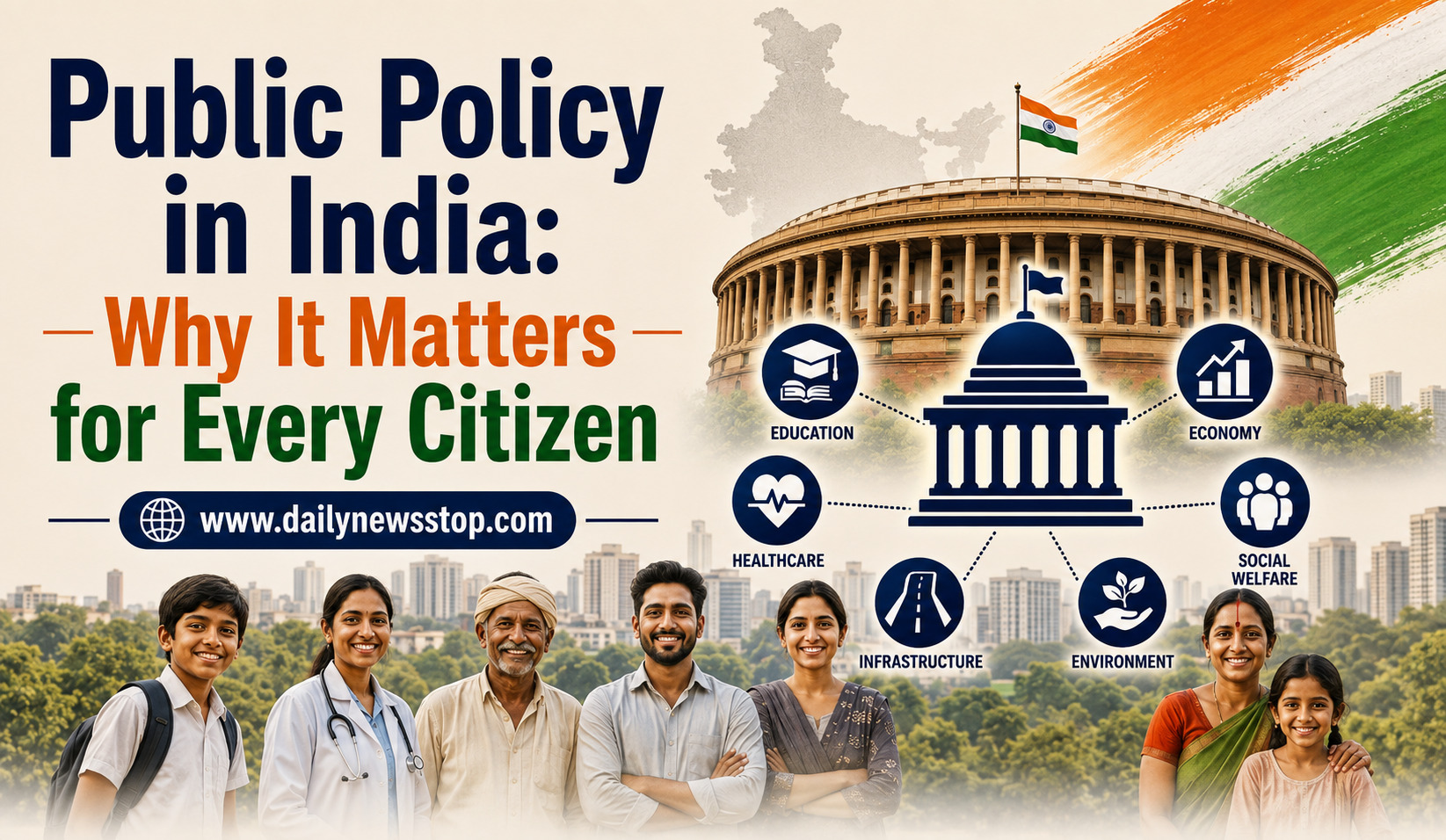
Every day, governments make decisions that influence the lives of millions of people. Whether it is building highways, improving public healthcare, reforming education, supporting farmers, promoting digital services, or protecting the environment, these decisions are guided by public policy. Although the term may sound technical, public policy affects every citizen in ways that are often overlooked.
In India, public policy serves as the bridge between the government’s goals and the everyday needs of the people. It helps identify national challenges, allocate public resources, and create solutions that aim to improve the quality of life. From major economic reforms to local development initiatives, public policy shapes how the country grows and responds to changing circumstances.
Understanding public policy is important because it enables citizens to appreciate how government decisions are made, why certain policies are introduced, and how they influence society. An informed public is also better equipped to participate in democratic processes and contribute to meaningful discussions about the country’s future.
What Is Public Policy?
Public policy refers to the actions, decisions, and strategies adopted by the government to address public issues and achieve specific objectives. These policies provide direction for governance and guide the implementation of laws, programs, and development initiatives.
Public policy is not limited to national governments. Policies are developed and implemented at the central, state, and local levels, depending on the issue being addressed. Some policies focus on long-term economic development, while others respond to immediate concerns such as natural disasters, public health emergencies, or changes in global conditions.
Every policy begins with the recognition of a problem. Government institutions study the issue, consult experts, analyze available data, consider public opinion, and evaluate different solutions before arriving at a decision.
Why Public Policy Matters?
Public policy influences nearly every aspect of daily life. Citizens may not always notice its presence, but many of the services they use are the result of carefully planned government policies.
Roads, schools, hospitals, public transport systems, drinking water projects, electricity supply, environmental protection measures, and welfare schemes all operate within a policy framework. These decisions determine how public funds are spent, which sectors receive priority, and how national resources are managed.
Good public policy can improve living standards, encourage economic growth, create employment opportunities, and strengthen public institutions. Poorly designed policies, however, may lead to inefficiency, unequal access to services, or unintended economic and social consequences.
Because these decisions affect everyone, public policy plays a central role in national development.
How Public Policy Is Created in India?
Developing public policy is a structured process involving several institutions and stakeholders. Government ministries, expert committees, research organizations, economists, legal advisors, and administrative officials often work together to identify challenges and recommend solutions.
Public discussions, consultations with state governments, parliamentary debates, and feedback from industry groups or civil society organizations may also contribute to policymaking. In many cases, policies evolve over time as governments respond to changing economic conditions, technological advancements, and public expectations.
Once a policy is approved, government departments are responsible for implementing it through various programs and administrative mechanisms. Monitoring and evaluation continue even after implementation to assess whether the policy is achieving its intended objectives.
Public Policy and Economic Development
Economic growth is one of the areas where public policy has a significant impact. Government decisions regarding taxation, infrastructure investment, industrial development, digital innovation, and financial regulation influence the country’s economic performance.
Policies that encourage entrepreneurship, improve transportation networks, strengthen manufacturing, and attract investment can create employment opportunities and support long-term development. At the same time, governments must balance economic growth with social welfare, environmental sustainability, and fiscal responsibility.
The success of an economy depends not only on market forces but also on effective public policies that create a stable and predictable environment for businesses and citizens.
Improving Education Through Public Policy
Education is another sector where public policy directly affects people’s lives. Government policies determine how schools are funded, how educational standards are maintained, and how opportunities are expanded for students across different regions.
Efforts to improve literacy, promote digital learning, strengthen higher education, and encourage skill development are all guided by policy decisions. These initiatives aim to prepare young people for changing employment markets while reducing educational inequalities.
As technology transforms the workplace, education policies continue evolving to meet new social and economic demands.
Public Health and Citizen Welfare
Healthcare policies influence the availability, affordability, and quality of medical services across the country. Decisions related to disease prevention, vaccination programs, healthcare infrastructure, medical education, and public health awareness all fall within the scope of public policy.
Similarly, welfare policies support vulnerable sections of society through various government programs designed to improve living conditions, reduce poverty, and enhance social security.
The effectiveness of these policies often determines how well governments respond to public health challenges and support communities during difficult times.
Environmental Policies and Sustainable Development
As environmental concerns become increasingly important, public policy plays a critical role in promoting sustainable development. Governments introduce policies aimed at reducing pollution, protecting forests, conserving water resources, encouraging renewable energy, and addressing climate-related challenges.
Balancing economic development with environmental protection requires careful planning. Public policy helps establish regulations that support industrial growth while minimizing environmental damage and preserving natural resources for future generations.
Sustainability has become an essential consideration in modern policymaking as countries work toward long-term environmental goals.
Public Policy Strengthens Democracy
In a democratic country like India, public policy reflects the relationship between citizens and their government. Elections allow people to choose representatives, but policymaking determines how electoral promises are translated into action.
Parliament debates major policies before legislation is passed, while state legislatures consider policies affecting regional governance. Public participation, expert consultation, judicial review, and media discussions contribute to greater transparency throughout this process.
Democracy becomes stronger when policies are developed through informed debate and when governments remain accountable for their implementation.
The Role of Citizens in Public Policy
Citizens are not merely passive recipients of government policies. Their participation plays an important role in shaping public decisions. Through voting, public consultations, community engagement, awareness campaigns, and constructive feedback, people influence the direction of policymaking.
An informed citizen can better evaluate government performance, understand policy objectives, and participate responsibly in democratic discussions. Public awareness also encourages greater accountability by ensuring that governments remain responsive to the needs of society.
Digital communication has further expanded opportunities for citizens to engage with governance, making policymaking more transparent and participatory than in previous decades.
Challenges in Public Policymaking
Designing effective public policy is rarely straightforward. India is a vast and diverse country where regional priorities, economic conditions, cultural differences, and administrative capacities vary significantly.
A policy that works well in one state may require modification before being implemented elsewhere. Governments must therefore balance national objectives with local realities while considering available financial and administrative resources.
Implementation also presents challenges. Even well-designed policies require efficient coordination among government departments, adequate funding, trained personnel, and regular monitoring to achieve desired results.
Changing global conditions, technological developments, and evolving public expectations further require policymakers to adapt existing policies over time.
Why Policy Awareness Matters?
Many citizens encounter public policies every day without realizing it. Whether using public transportation, attending government schools, accessing healthcare services, paying taxes, or benefiting from infrastructure development, people experience the outcomes of policy decisions.
Understanding how policies are created helps citizens distinguish between political promises and actual governance. It also encourages informed discussions based on facts rather than assumptions.
Policy awareness strengthens democracy because informed citizens are more likely to participate responsibly in elections, public debates, and community initiatives.
The Future of Public Policy in India
As India continues to grow economically and technologically, public policy will become even more important. Emerging challenges such as artificial intelligence, cybersecurity, climate change, urbanization, population growth, and digital governance require innovative policy solutions.
Future policymaking is expected to rely increasingly on research, technology, and evidence-based decision-making. Governments will likely make greater use of data analysis, digital platforms, and public consultation to improve the effectiveness of policies.
Citizen expectations are also evolving. People increasingly seek transparency, efficient public services, environmental sustainability, and greater accountability from institutions. Public policy will continue adapting to meet these changing demands.
Conclusion
Public policy is far more than a collection of government decisions—it is the framework that shapes how a nation develops and how public resources are used to improve people’s lives. In India, public policies influence education, healthcare, infrastructure, economic growth, environmental protection, and countless other aspects of everyday life.
While governments are responsible for designing and implementing these policies, citizens also play an important role by staying informed, participating in democratic processes, and holding institutions accountable. A well-informed society contributes to stronger governance and more effective policymaking.
As India moves toward a future defined by technological progress, economic transformation, and social change, thoughtful public policy will remain essential for addressing national challenges and creating opportunities for all. Understanding how public policy works is therefore not only useful for students, professionals, or policymakers it is valuable knowledge for every citizen who wishes to actively participate in the country’s democratic journey.