
School plays a vital role in shaping our future. It teaches us mathematics, science, history, languages, and many other subjects that help us understand the world. We learn how to solve equations, memorize facts, write essays, and prepare for examinations. These lessons provide the foundation for higher education and professional careers.
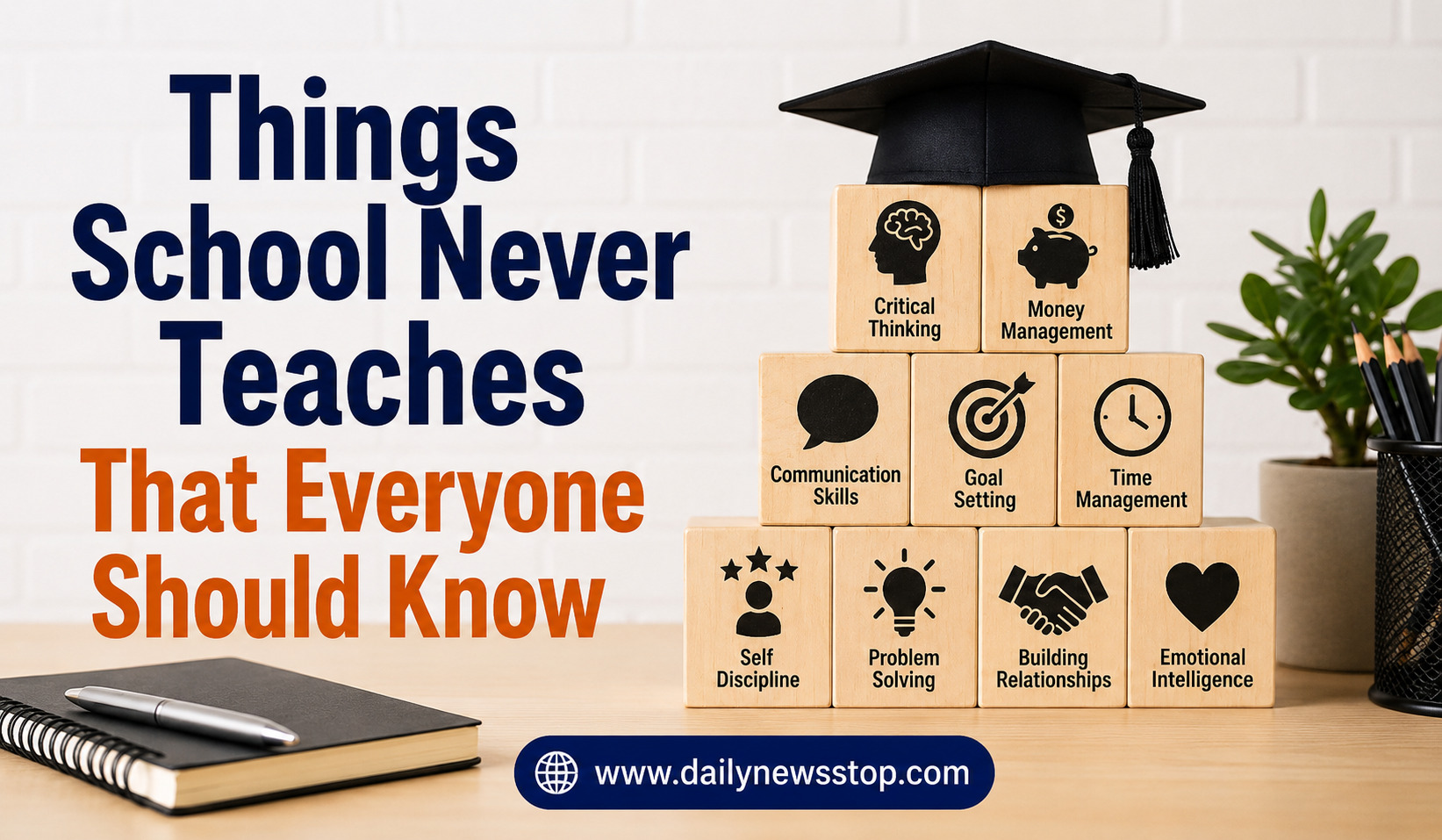
Yet, once we step outside the classroom, many of life’s biggest challenges come with no textbook, no syllabus, and no final exam. Managing money, handling failure, building healthy relationships, making difficult decisions, and maintaining emotional well-being are skills that often have to be learned through personal experience.
This doesn’t mean schools have failed us. Education systems have a limited amount of time and must cover a wide range of academic subjects. However, life extends far beyond academics. As adults, we often realize that success depends just as much on emotional intelligence, communication, adaptability, and resilience as it does on grades.
The lessons that matter most are sometimes the ones we learn long after graduation.
Failure Is Not the End of the Journey
In school, mistakes are often associated with lower marks and poor performance. Students are encouraged to avoid failure because examinations usually reward correct answers rather than learning through trial and error.
Life works differently.
Many successful entrepreneurs, artists, athletes, and professionals have experienced repeated failures before achieving success. Rejections, setbacks, and unexpected obstacles are a normal part of personal growth.
Rather than defining your future, failure often teaches patience, problem-solving, and perseverance. The ability to recover after disappointment becomes one of the most valuable skills anyone can develop.
Life rarely asks whether you’ve failed. It asks whether you’re willing to keep trying.
Managing Money Is a Lifelong Skill
Most students leave school knowing how to solve algebraic equations but very little about budgeting, saving, investing, or understanding loans.
Financial literacy affects almost every stage of adult life. Knowing how to spend wisely, avoid unnecessary debt, prepare for emergencies, and plan for future goals can have a greater impact on long-term stability than many academic subjects.
Learning to manage money isn’t about becoming wealthy overnight. It’s about making informed decisions that provide financial security and reduce unnecessary stress.
The earlier these habits develop, the greater their long-term benefits.
Communication Opens More Doors Than Marks Alone
Academic knowledge is important, but the ability to communicate clearly often determines how effectively that knowledge is shared.
Whether you’re attending a job interview, leading a team, negotiating with clients, or resolving disagreements within a family, communication influences every aspect of life.
Listening carefully, expressing ideas respectfully, and understanding different perspectives are skills that improve relationships both personally and professionally.
People rarely remember every grade you earned, but they often remember how you made them feel during conversations.
Relationships Need Effort
Textbooks can explain historical events and scientific theories, but they cannot fully teach empathy, trust, or emotional connection.
Healthy friendships, strong families, and lasting relationships require patience, understanding, honesty, and mutual respect. They also require learning how to apologize, forgive, and communicate during difficult moments.
These lessons are usually learned through real experiences rather than classroom instruction.
Building meaningful relationships often becomes one of life’s greatest achievements.
Comparing Yourself to Others Never Ends Well
School naturally encourages comparison through grades, rankings, and competition.
While healthy competition can inspire improvement, constantly measuring your worth against others can create unnecessary pressure.
Life follows different timelines for everyone. Some people build successful careers early, while others discover their passion much later. Some achieve financial stability quickly, while others prioritize family, creativity, or personal growth.
Success cannot always be measured using the same standards.
Learning to focus on your own progress instead of someone else’s journey brings greater confidence and peace of mind.
Time Is Your Most Valuable Resource
Many people spend years chasing money without realizing that time is the one resource that cannot be replaced.
How you spend your hours shapes your habits, relationships, health, and future opportunities.
Learning to prioritize meaningful work, quality rest, and time with loved ones becomes increasingly important as responsibilities grow.
Successful people often understand that managing time effectively is just as valuable as managing finances.
Once time passes, it cannot be earned back.
Mental Well-Being Deserves Attention
Academic achievement often receives more recognition than emotional health.
Yet stress, anxiety, burnout, and emotional exhaustion affect people regardless of their qualifications or career success.
Understanding your emotions, asking for support when needed, maintaining healthy routines, and taking care of your mental well-being are essential parts of living a balanced life.
Productivity means little if it comes at the cost of long-term health.
Taking care of yourself isn’t a distraction from success it helps make success sustainable.
Adaptability Is More Valuable Than Having All the Answers
The world changes faster than ever before.
Technology evolves, industries transform, and careers that exist today may look completely different a decade from now.
Rather than memorizing every answer, lifelong success depends on the willingness to keep learning.
People who remain curious, adaptable, and open to change are often better prepared for unexpected opportunities than those who rely only on what they learned years ago.
Education doesn’t end with graduation it continues throughout life.
Success Looks Different for Everyone
School often creates a standard definition of achievement based on marks, awards, and academic performance.
Adult life is far more diverse.
For one person, success may mean starting a business. For another, it could be raising a happy family, traveling the world, writing a book, pursuing creative work, or simply living a peaceful and balanced life.
There is no universal formula for happiness or fulfillment.
Defining success according to your own values rather than society’s expectations leads to greater satisfaction in the long run.
Learning Never Really Ends
Graduation is often seen as the end of formal education, but in reality, it marks the beginning of a different kind of learning.
Every job, relationship, challenge, and opportunity teaches something new. Reading books, developing skills, meeting people from different backgrounds, and staying curious continue to expand your understanding of the world.
The people who grow the most are usually those who never stop learning.
Knowledge gained through experience often becomes just as valuable as knowledge gained in classrooms.
Final Thoughts
Schools provide the academic foundation that helps us understand the world, but life itself becomes our greatest teacher. Beyond textbooks and examinations lie lessons about resilience, kindness, financial responsibility, communication, relationships, and personal growth—lessons that shape who we become far more than any report card ever could.
As we grow older, we realize that success depends on much more than intelligence or qualifications. It depends on how we respond to failure, how we treat others, how wisely we manage our time and money, and how willing we are to keep learning throughout life.
Education is one of life’s greatest gifts, but it doesn’t end when school does. Every experience, every challenge, and every conversation has something to teach us if we’re willing to learn.
In the end, the most valuable lessons aren’t always found in classrooms. They’re found in everyday life, where patience, empathy, courage, and resilience become the subjects that truly shape our future.