
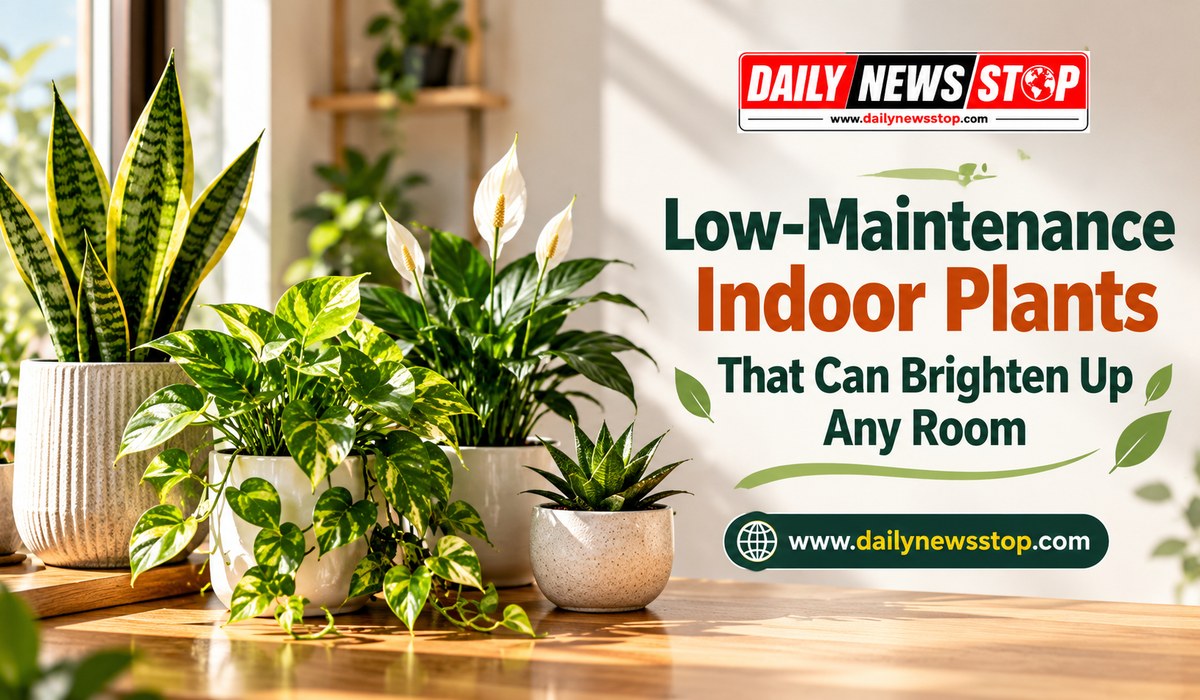
Indoor plants are a simple way to make your home feel fresh, comfortable, and inviting. Whether you live in a small apartment or a spacious house, a few green plants can add color and natural beauty to almost any room. Moreover, you do not need to be an experienced gardener to enjoy the benefits of indoor greenery.
Low-maintenance indoor plants are especially useful for busy people who want attractive home decor without spending hours on plant care. Many varieties grow well in pots and need only suitable light, occasional watering, and basic attention. Some feature tall, upright leaves, while others have trailing stems or colorful foliage that looks beautiful on shelves and tables.
However, choosing the right plant is important. A plant that thrives beside a sunny window may struggle in a dark corner. Similarly, some varieties need dry soil between waterings, while others prefer more consistent moisture.
By understanding a few basic care requirements, you can select plants that match your home, daily routine, and decorating style.
Why Add Indoor Plants to Your Home?
Indoor plants bring natural texture and color into living spaces. They can soften the appearance of plain walls, make empty corners feel complete, and create an attractive contrast with furniture and decorative accessories.
Additionally, plants are available in many shapes and sizes. Therefore, you can find suitable options for large living rooms, compact bedrooms, kitchen shelves, and work desks.
Here are some reasons to consider adding indoor plants to your home:
- Natural decoration: Green leaves add color without requiring expensive furniture or wall decorations.
- Flexible placement: Small plants fit on desks and shelves, while larger varieties can fill empty corners.
- Different styles: Glossy leaves, striped foliage, and trailing vines complement various interior designs.
- Simple care options: Many houseplants tolerate occasional missed watering when their basic needs are met.
- Personal enjoyment: Looking after a growing plant can provide a rewarding hobby and a pleasant daily routine.
Nevertheless, indoor plants are not completely maintenance-free. They need appropriate light, water, suitable soil, and occasional checks for pests or damaged leaves.
1. Snake Plant: An Easy Choice for Beginners
The snake plant is one of the most popular indoor plants because of its upright leaves and distinctive appearance. Its firm, sword-shaped foliage often features dark green patterns with yellow or lighter-colored edges.
This plant suits modern homes because it adds height without taking up much floor space. Furthermore, it can tolerate low to bright indirect light, although it generally grows better when it receives sufficient light.
How to Care for a Snake Plant
- Light: Low to bright indirect light.
- Watering: Allow the soil to dry thoroughly before watering again.
- Placement: Living rooms, bedrooms, offices, and hallways with natural light.
- Maintenance: Remove damaged leaves and wipe away dust when necessary.
For example, place a snake plant in a tall ceramic pot beside a sofa or near a bookshelf. Its vertical leaves can make a room look organized without adding visual clutter.
The most important care tip is to avoid overwatering. Because snake plants store water in their leaves, constantly wet soil can cause root rot.
Keep this plant away from pets that might chew it, as snake plants are toxic to cats and dogs if ingested.
2. Pothos: Beautiful Trailing Greenery
Pothos is a great option if you want a plant that spreads naturally across shelves or hangs from a basket. Its heart-shaped leaves and long stems create a relaxed appearance that works well in both modern and traditional homes.
Different varieties offer different leaf patterns. Golden pothos features yellow markings, while other types may have cream or pale green patterns. In suitable light, these patterns can make the foliage particularly attractive.
How to Care for Pothos
- Light: Low to bright indirect light.
- Watering: Water when the upper portion of the soil becomes dry.
- Placement: Hanging baskets, bookshelves, cabinets, and office shelves.
- Maintenance: Trim long stems to maintain the desired shape.
Pothos is especially useful when floor space is limited. For instance, you can place a pot on a high shelf and allow the vines to trail down naturally.
Additionally, healthy stem cuttings can often develop roots in water, allowing you to grow new plants. However, pothos is toxic to cats and dogs if chewed or swallowed, so choose its location carefully.
3. Spider Plant: Freshness for Small Spaces
The spider plant has long, arching leaves that often feature green and white stripes. Its flowing shape makes it an attractive addition to kitchens, bedrooms, and home offices.
Mature plants may also produce small offshoots that hang from the parent plant. These plantlets give the spider plant its distinctive appearance and can be used to grow new plants.
How to Care for a Spider Plant
- Light: Moderate to bright indirect light.
- Watering: Water when the top layer of soil begins to dry.
- Placement: Window ledges, hanging baskets, kitchen shelves, and work desks.
- Maintenance: Remove brown or damaged leaf tips when needed.
A spider plant can brighten an empty shelf without making the area feel crowded. Likewise, placing one in a hanging planter allows its leaves to spread naturally.
Spider plants are considered non-toxic to cats and dogs. Even so, discourage pets from eating the foliage, since consuming large amounts of plant material may cause digestive discomfort.
4. ZZ Plant: Attractive and Easy to Maintain
The ZZ plant has glossy, oval-shaped leaves that grow along thick, upright stems. Its deep green foliage gives it a polished look, making it suitable for living rooms, offices, and other indoor spaces.
One of its main advantages is its ability to tolerate periods between waterings. The plant stores water in underground rhizomes, which helps it cope with relatively dry conditions.
How to Care for a ZZ Plant
- Light: Low to bright indirect light.
- Watering: Allow the soil to dry well between waterings.
- Placement: Living rooms, offices, and side tables with some natural light.
- Maintenance: Remove yellow leaves and clean the foliage occasionally.
A ZZ plant in a simple planter can add greenery beside a television unit or at the end of a desk. However, do not assume that it can survive in complete darkness. Like other plants, it needs light to grow.
The ZZ plant is toxic if chewed or swallowed, so keep it away from children and pets who may try to eat its leaves.
5. Peace Lily: Elegant Green Leaves and White Flowers
The peace lily is a popular choice for people who want a plant with both attractive foliage and flowers. Its broad green leaves provide a rich backdrop for the white structures that resemble flowers.
Peace lilies generally prefer bright, indirect light and soil that remains moderately moist. They may survive in lower light, but flowering can become less frequent.
How to Care for a Peace Lily
- Light: Medium to bright indirect light.
- Watering: Water when the upper layer of soil begins to dry.
- Placement: Living rooms, dining areas, and bright study spaces.
- Maintenance: Remove faded flowers and damaged leaves.
Place a peace lily near a window where it receives filtered daylight. Also, select a pot with drainage holes to prevent excess water from collecting around the roots.
Although peace lilies can make a room look elegant, they are not suitable for every household. They are toxic to cats and dogs if ingested, so consider a pet-safe alternative if animals can reach the plant.
6. Aloe Vera: Ideal for Sunny Windowsills
Aloe vera is a succulent with thick, fleshy leaves that store water. Its distinctive shape adds a modern touch to windowsills, desks, and small tables.
Unlike pothos or peace lilies, aloe vera prefers bright light. Therefore, it is best suited to a room with a sunny window rather than a dim corner.
How to Care for Aloe Vera
- Light: Bright light, with some direct sunlight after gradual adjustment.
- Watering: Let the soil dry completely before watering again.
- Placement: Sunny windowsills and bright indoor spaces.
- Maintenance: Remove dried leaves and use a well-draining potting mix.
Aloe vera looks attractive in a terracotta pot, particularly when paired with wooden furniture or neutral-colored decor. Moreover, its compact size makes it a useful choice for small homes.
Avoid leaving aloe vera in waterlogged soil because its roots can rot. Also, keep it away from cats and dogs, as the plant can be toxic when eaten.
7. Jade Plant: Compact Greenery with Thick Leaves
The jade plant is another succulent that works well in bright indoor spaces. It has rounded, fleshy leaves and sturdy stems that can develop a small-tree appearance as the plant matures.
Because it grows relatively slowly, jade can be a practical choice for a sunny desk or side table. However, it needs brighter conditions than plants that tolerate low light.
How to Care for a Jade Plant
- Light: Bright light, including some direct sunlight.
- Watering: Allow the soil to dry between waterings.
- Placement: Sunny windowsills, bright tables, and well-lit rooms.
- Maintenance: Remove damaged leaves and prune lightly when needed.
For a simple decorative arrangement, place a jade plant in a small pot and display it near a window. Its rounded leaves provide a different texture from the long foliage of snake plants and spider plants.
Jade plants are toxic to cats and dogs if ingested. Therefore, keep them in a secure location if pets live in your home.
8. Parlor Palm: A Soft, Tropical Appearance
The parlor palm is known for its slender stems and delicate, feather-like leaves. It adds a tropical touch without the oversized appearance of some larger indoor palms.
It generally grows well in moderate indirect light and suits rooms that receive daylight without strong direct sunlight. Additionally, its relatively manageable size makes it useful for apartments and smaller living spaces.
How to Care for a Parlor Palm
- Light: Moderate to bright indirect light.
- Watering: Water when the upper layer of soil begins to dry.
- Placement: Living-room corners, bedrooms, and home offices.
- Maintenance: Remove dry leaves and avoid harsh drafts.
A parlor palm in a woven or neutral-colored planter can complement wooden furniture and soft furnishings. It can also fill an empty corner without requiring several smaller plants.
Parlor palms are considered non-toxic to cats and dogs. However, always store fertilizers and other gardening products safely.
9. Peperomia: Small Plants with Attractive Leaves
Peperomia includes many varieties with different leaf shapes, textures, and patterns. Some have smooth, rounded leaves, while others feature rippled surfaces or contrasting colors.
Most common peperomias remain relatively compact, so they suit shelves, desks, bedside tables, and small apartments. They also provide visual variety without requiring a large pot or much floor space.
How to Care for Peperomia
- Light: Bright, indirect light.
- Watering: Let the upper portion of the soil dry before watering.
- Placement: Work desks, bookshelves, side tables, and window areas with filtered light.
- Maintenance: Remove damaged leaves and rotate the pot occasionally.
You can group two small peperomia plants in different containers to create an attractive display. Alternatively, use one as a simple accent on a desk where a larger plant would feel overwhelming.
Many common peperomia varieties are considered non-toxic to cats and dogs. Nevertheless, check the exact variety before purchasing it for a pet-friendly home.
10. Cast Iron Plant: Suitable for Shadier Rooms
The cast iron plant is valued for its durability and broad, dark green leaves. Its upright foliage gives it a full appearance, while its relatively slow growth means it does not require constant trimming.
It tolerates lower light better than many houseplants. However, it still needs some natural or suitable artificial light to remain healthy.
How to Care for a Cast Iron Plant
- Light: Low to moderate indirect light.
- Watering: Allow the upper layer of soil to dry somewhat between waterings.
- Placement: Shadier living rooms, offices, and areas away from intense sunlight.
- Maintenance: Remove old leaves and clean dusty foliage.
This plant can be a useful option for a room that does not receive direct sunlight. Even so, place it near the brightest available spot instead of keeping it in a completely dark corner.
Check the leaves regularly for yellowing, pests, or other signs of stress. These changes may indicate that the plant needs better light or a different watering routine.
How to Choose the Right Indoor Plant for Your Room
The best indoor plant is not necessarily the most expensive or popular one. Instead, choose a variety that suits the conditions in your home.
Consider the Amount of Natural Light
First, observe how much daylight your room receives. A sunny windowsill may suit aloe vera and jade plants, while a spot with filtered daylight can work well for pothos, peperomia, and parlor palms.
Plants that tolerate low light still need light to survive. Therefore, if a room has no usable daylight, consider a suitable grow light.
Check Your Available Space
Small plants work well on desks, kitchen counters, and bedside tables. Meanwhile, taller plants can fill empty corners or add height beside furniture.
For a balanced look, combine plants with different leaf shapes and growth patterns. For example, an upright snake plant can look attractive beside a trailing pothos.
Think About Your Daily Routine
If you often forget to water plants, consider varieties such as snake plants and ZZ plants that tolerate dry periods. However, if you enjoy caring for plants regularly, a peace lily may suit your routine better.
Always check the soil before watering. The right frequency depends on the plant, pot size, soil type, room temperature, and season.
Check Plant Safety Around Pets
Some common houseplants can harm cats and dogs if eaten. Therefore, check a plant’s toxicity before bringing it home, especially if your pets can reach its leaves.
Spider plants, parlor palms, and many peperomia varieties are generally considered pet-safe choices. Even with these plants, discourage pets from chewing the foliage.
Simple Tips for Keeping Indoor Plants Healthy
Low-maintenance plants still need a little attention. Fortunately, a few simple habits can prevent many common problems.
- Use pots with drainage holes: Proper drainage helps prevent water from collecting around the roots.
- Avoid overwatering: Check the soil instead of following a fixed watering schedule for every plant.
- Clean the leaves: Gently wipe broad leaves with a soft, damp cloth to remove dust.
- Remove damaged foliage: Cut away dead or damaged leaves using clean tools.
- Adjust light gradually: Move plants into brighter conditions slowly to reduce the risk of leaf damage.
- Watch for pests: Inspect the leaves and stems occasionally for small insects or unusual marks.
- Choose suitable soil: Succulents generally need faster-draining soil than plants that prefer more consistent moisture.
Additionally, avoid placing plants directly beside strong air-conditioning drafts or heating vents. Sudden changes in temperature can stress many indoor varieties.
Key Takeaways
- Low-maintenance indoor plants can add natural color and texture to almost any room.
- Snake plants and ZZ plants are popular choices for people who want to water less frequently.
- Pothos and spider plants work well on shelves and in hanging baskets.
- Aloe vera and jade plants need brighter light and well-draining soil.
- Peace lilies and parlor palms can add a softer, elegant appearance to living spaces.
- Check soil moisture before watering and always provide suitable drainage.
- Consider available light, room size, daily routines, and pet safety before choosing a plant.
Once you have chosen the right indoor plants, arranging them thoughtfully can make your rooms feel more inviting. For inspiration on styling greenery during special occasions, check out these indoor plant decor ideas for festive home makeovers.
Frequently Asked Questions
1. Which indoor plant is easiest to maintain?
Snake plants and ZZ plants are popular beginner-friendly options because they tolerate a range of indoor light conditions and can handle periods between waterings.
2. Which indoor plants grow well in low light?
Snake plants, ZZ plants, pothos, and cast iron plants can tolerate lower light than many other houseplants, although none can grow well in complete darkness.
3. How often should I water indoor plants?
Watering frequency depends on the plant species, soil, pot size, temperature, and season, so check the soil moisture before adding water.
4. Which indoor plants are suitable for homes with pets?
Spider plants, parlor palms, and many peperomia varieties are generally considered non-toxic to cats and dogs, but verify the exact plant before bringing it home.
5. Can indoor plants brighten a room without direct sunlight?
Yes, many indoor plants grow well in indirect light, provided they receive enough brightness to support healthy growth.