
A well-organized home often looks calm, inviting, and easy to maintain. However, many people assume that creating an organized space requires expensive storage containers, custom furniture, or a complete home makeover. Social media is filled with beautifully arranged pantries, perfectly coordinated closets, and stylish storage solutions that can make home organization seem costly and out of reach.
The reality is much simpler. An organized home isn’t about buying more things—it’s about making better use of what you already have. In fact, purchasing unnecessary storage products before organizing can sometimes create even more clutter.
Whether you live in a spacious house or a small apartment, organizing your home on a budget is entirely possible. Small changes, thoughtful planning, and a little creativity can transform everyday spaces without putting pressure on your wallet.
If you’ve been waiting for the “perfect time” or a larger budget to organize your home, you may discover that the best place to start is with the items you already own.
Begin by Decluttering, Not Shopping
One of the biggest mistakes people make is buying storage boxes before deciding what actually needs to be stored.
Every home gradually collects items that are rarely used old magazines, duplicate kitchen utensils, clothes that no longer fit, or decorations that have been sitting in boxes for years. These items quietly occupy valuable space and make every room feel more crowded than it really is.
Taking time to sort through your belongings allows you to identify what you truly need and what can be donated, recycled, or discarded. Once unnecessary items are removed, you’ll often find that your existing storage space becomes much more functional.
Decluttering costs nothing, yet it creates one of the biggest improvements in home organization.
Give Everything a Permanent Place
One of the simplest ways to keep a home organized is making sure every item has a designated spot.
When belongings are returned to the same place after use, clutter has less opportunity to build up. Everyday items like keys, chargers, wallets, stationery, and remote controls are much easier to find when they always live in the same location.
This habit also saves time. Instead of searching for misplaced items every morning, you’ll know exactly where to look.
Organization isn’t about creating perfection it’s about reducing unnecessary decisions throughout the day.
Make Better Use of Vertical Space
Many homes have limited floor space but plenty of unused wall space.
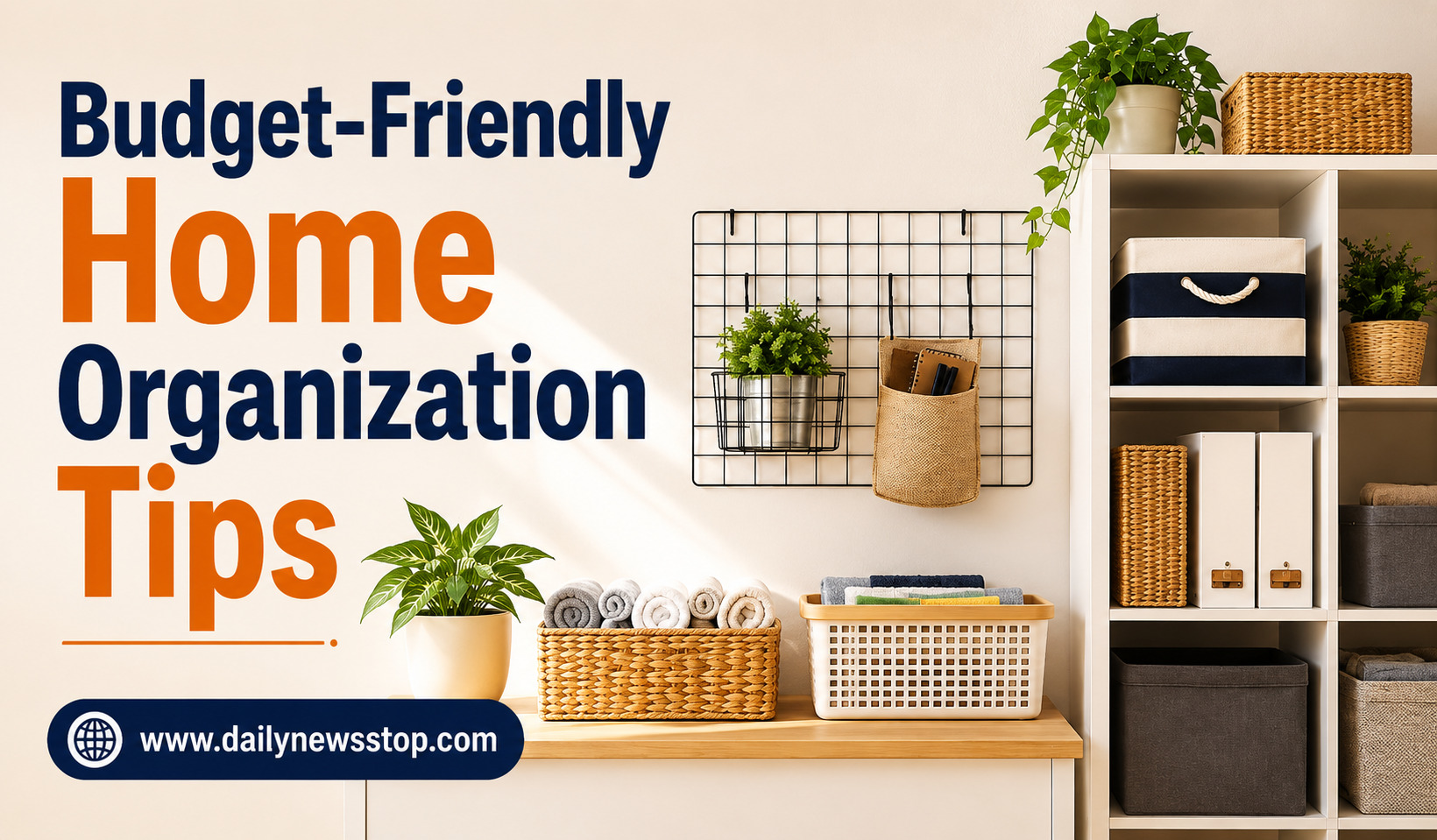
Simple shelves, wall hooks, pegboards, or hanging organizers can help store frequently used items without making rooms feel crowded. In kitchens, walls can hold cooking utensils or mugs. In bedrooms, hooks can organize bags, hats, or accessories. Even small bathrooms benefit from shelves installed above toilets or beside mirrors.
Using vertical space allows you to keep surfaces clear while maximizing storage without major renovations.
Often, the best storage solution is already available you simply need to look upward.
Repurpose Everyday Household Items
Home organization doesn’t always require buying specialized containers.
Glass jars can neatly store spices, office supplies, or bathroom essentials. Shoe boxes can become drawer organizers for socks, accessories, or stationery. Baskets you already own can be used to collect blankets, toys, or magazines.
Even empty food containers can be reused to organize small household items in cupboards or utility areas.
Repurposing existing items not only saves money but also reduces waste, making your organization efforts more environmentally friendly.
Sometimes the most practical storage solutions are already sitting inside your home.
Focus on One Area at a Time
Looking at an entire house can feel overwhelming, especially if clutter has built up over time.
Instead of trying to organize everything in one weekend, focus on one small area at a time. A single kitchen drawer, one wardrobe shelf, or the bathroom cabinet can often be completed in less than an hour.
Completing one manageable project creates visible progress and builds motivation to continue.
Small improvements made consistently are usually more sustainable than attempting dramatic makeovers all at once.
Keep Frequently Used Items Easy to Reach
A home stays organized more easily when it matches the way you actually live.
Items you use every day should be stored where they are most convenient to access. Frequently used cooking tools belong near the stove, everyday shoes should be placed close to the entrance, and work essentials should remain within easy reach of your desk.
Less frequently used items can be stored on higher shelves, inside storage boxes, or in less accessible areas.
Organizing around daily habits reduces unnecessary effort and makes it easier to maintain tidy spaces.
Develop Small Daily Habits
Even the most organized home can quickly become cluttered if small messes are ignored.
Spending just ten or fifteen minutes each day putting items back where they belong can prevent chores from becoming overwhelming later. Washing dishes after meals, folding laundry instead of leaving it on chairs, or clearing kitchen counters before bed keeps clutter from accumulating.
These simple routines require far less effort than spending an entire weekend reorganizing a messy home.
Consistency is often more valuable than perfection.
Avoid Buying Storage for Every Problem
When trying to organize, it’s tempting to believe that another basket, shelf, or storage bin will solve the issue.
In reality, storage products are most useful after you’ve reduced unnecessary belongings. Otherwise, they simply organize clutter rather than eliminate it.
Before purchasing any organizer, ask yourself whether you truly need additional storage or whether reducing the number of items would solve the problem more effectively.
Sometimes owning less creates more space than buying more.
Create Spaces That Are Easy to Maintain
The best organization systems are the ones that fit naturally into your daily routine.
Complicated arrangements often look attractive initially but become difficult to maintain over time. Simple systems such as labeled containers, accessible shelves, or designated baskets for everyday items encourage everyone in the household to keep things organized.
An organized home should make life easier, not create additional work.
Practical solutions are almost always more successful than complicated ones.
Final Thoughts
Creating an organized home doesn’t require a large budget or expensive storage products. More often than not, it begins with thoughtful decisions about what to keep, how to use available space more effectively, and developing simple habits that prevent clutter from returning.
By focusing on gradual improvements rather than perfect results, you can create a home that feels calmer, more functional, and easier to manage. Repurposing items you already own, making better use of vertical space, and organizing according to your everyday routines can have a surprisingly big impact without increasing your expenses.
Remember that home organization isn’t about creating a picture-perfect space for social media. It’s about designing an environment that supports your daily life, reduces stress, and allows you to spend less time searching for things and more time enjoying your home.
A well-organized home isn’t built in a single day. It’s created through small, intentional choices that make everyday living simpler, more comfortable, and more meaningful.