
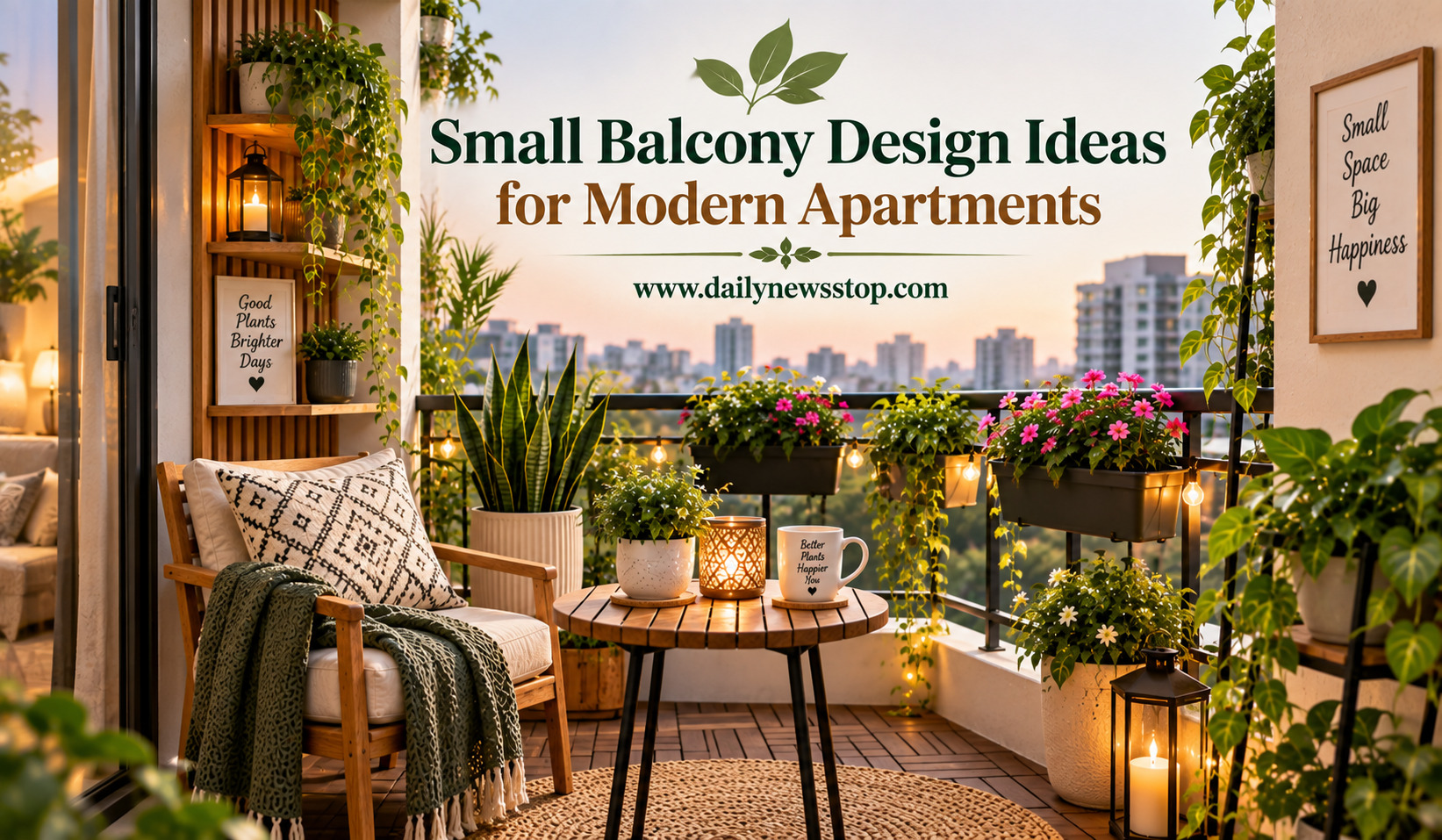
A small balcony can become one of the most enjoyable areas of a modern apartment when it is designed with purpose. Instead of treating it as extra storage or an unused outdoor strip, you can turn it into a cozy reading corner, a mini garden, a morning coffee spot, or a peaceful place to relax.
The challenge is making a compact balcony comfortable without filling it with furniture and decorations. The best approach is to focus on smart layouts, space-saving pieces, greenery, practical storage, and a simple visual theme. With a few thoughtful changes, even a narrow balcony can feel stylish, open, and functional.
Start With a Clear Balcony Purpose
Before choosing furniture or décor, decide how you want to use your balcony. A small space works better when it has one main function rather than trying to accommodate everything.
You might want a two-person coffee corner, a reading nook, a compact garden, or a small work-from-home area. Once the purpose is clear, it becomes much easier to decide what deserves valuable floor space.
For example, a balcony designed primarily for morning tea may only need two slim chairs and a small table. A plant-focused balcony may benefit more from vertical planters and a narrow bench than from bulky seating.
Choose Space-Saving Balcony Furniture
Furniture can quickly overwhelm a small balcony. Instead of choosing standard outdoor furniture, look for pieces that match the dimensions of the space.
Foldable chairs and tables are particularly useful because they can be moved or stored when the balcony needs to be cleared. A narrow bench can provide seating for more than one person without taking up the same amount of space as separate chairs.
Wall-mounted or railing tables can also provide a convenient surface while leaving the floor open. For extremely narrow balconies, a single comfortable chair paired with a compact side table may be all you need.
Consider Multi-Functional Furniture
A storage bench can provide seating while hiding cushions or gardening supplies. A small stool can work as both a seat and a plant stand. A foldable table can become a dining surface when needed and disappear against the wall afterward.
This approach prevents the balcony from becoming crowded with items that are only occasionally useful.
Use Vertical Space for Balcony Plants
Plants are one of the easiest ways to make a balcony feel fresh, but placing too many pots on the floor can reduce usable space. Vertical gardening solves this problem by moving greenery upward.
Wall-mounted planters, narrow shelves, hanging containers, and tiered plant stands can create a green display without consuming much floor area. Trailing plants are especially effective because their foliage can cascade downward and add softness to the space.
For a modern appearance, use planters with similar shapes or finishes. You can also combine different plant heights to create a layered effect.
Create a Compact Balcony Garden
You do not need dozens of plants to create an attractive balcony garden. A carefully selected collection of plants can have much more impact than a crowded arrangement.
Choose plants according to the sunlight your balcony receives. Bright balconies can accommodate many sun-loving plants, while shaded balconies are better suited to plants that tolerate lower light.
A compact balcony garden can include:
- Tall, narrow plants in corners.
- Small pots along a wall or railing.
- Trailing plants in elevated containers.
- Herbs in slim rectangular planters.
Keep enough open space between plants so that watering, cleaning, and movement remain easy.
Select a Simple Colour Scheme
A limited colour palette can make a small balcony appear more organized. Too many competing colors can make a compact space feel visually busy.
Neutral shades such as white, beige, grey, natural wood, and black create a contemporary foundation. Green plants can then provide the main natural color.
If you want something more expressive, introduce one accent color through cushions, planters, an outdoor rug, or a feature wall. Terracotta, muted blue, olive, or warm yellow can add personality without overwhelming the space.
Add a Comfortable Outdoor Rug
An outdoor rug can visually define the balcony and make it feel more like an extension of your home. Choose a size that fits the seating area without covering every inch of the floor.
Simple geometric patterns can suit modern apartments, while natural textures work well with wooden furniture and plants.
Because balconies are exposed to weather and dust, select a material designed for outdoor use and make sure it can be cleaned easily.
Make the Walls Part of the Design
Walls are often the most underused surfaces on a small balcony. Instead of leaving them completely empty, use them for practical and decorative elements.
A vertical garden, compact shelf, artwork designed for outdoor conditions, or textured wall panel can create a focal point without reducing floor space.
If you prefer a minimalist look, one carefully designed wall feature is usually enough. The goal is to use vertical space without turning the balcony into a crowded display area.
Try a Green Feature Wall
A green feature wall can make a compact balcony feel more connected to nature. You can create one with a collection of small planters, a vertical planter system, or climbing and trailing plants.
Choose a consistent arrangement rather than randomly attaching pots across the wall. Repetition in planter shape or color can make the display feel more intentional.
Add Privacy Without Making the Balcony Feel Closed
Privacy can be important in apartment buildings, especially when balconies are close to neighboring homes. However, a completely enclosed balcony can feel smaller and darker.
Instead, consider lightweight privacy solutions such as tall plants, bamboo-style screens, outdoor curtains, or a partial decorative screen.
Plants can be particularly effective because they provide privacy while maintaining the natural outdoor character of the balcony. Tall, narrow varieties are useful when floor space is limited.
Use Lighting to Create an Evening Retreat
Good lighting can transform a small balcony after sunset. You do not need strong overhead lighting to make the space functional and inviting.
Warm decorative lights, compact wall lamps, lantern-style fixtures, or subtle string lights can create a comfortable evening atmosphere.
Keep the lighting simple and avoid covering every surface with illuminated decorations. One or two well-positioned light sources can highlight plants, seating, and architectural features while maintaining a relaxed mood.
Choose Balcony Flooring Carefully
Flooring has a major influence on the appearance of a small balcony. If the existing surface looks plain or dated, interlocking outdoor tiles or a suitable weather-resistant floor covering can create a noticeable change without major renovation.
Wood-look finishes can add warmth, while stone-inspired surfaces can create a contemporary appearance. Choose materials that are suitable for outdoor exposure and easy to maintain.
Avoid designs that are overly busy. A simple floor pattern can make the balcony feel more spacious.
Add a Small Coffee or Reading Corner
One of the most popular ways to use a compact balcony is as a personal relaxation space. A comfortable chair, a small table, and a few plants may be enough to create a cozy retreat.
Position the chair where you can enjoy the view while keeping the main walking path clear. A lightweight cushion can add comfort without making the furniture visually heavy.
For reading, add a small side table for books, tea, or a phone. If the balcony receives strong afternoon sun, consider adding suitable shade so the space remains comfortable.
Bring Indoor Décor Style Outdoors
A modern balcony looks more cohesive when its design relates to the interior room next to it. You can repeat materials, colours, or textures from your living room or bedroom.
For example, if your interior uses natural wood and neutral textiles, continue those elements outdoors with a wooden bench, woven accessories, and earthy planters.
This visual connection makes the balcony feel like an extension of the apartment rather than a separate space.
Keep Storage Hidden and Organized
Small balconies often become storage areas because there is nowhere else to keep cleaning tools, gardening equipment, or outdoor accessories. Instead of allowing these items to remain visible, introduce compact storage.
A slim cabinet, storage bench, covered box, or wall-mounted organizer can keep everyday items out of sight.
Use storage selectively. The purpose is to maintain functionality without turning the balcony into another cluttered storage room.
Modern Balcony Design Ideas at a Glance
| Design Idea | Best For | Main Benefit |
| Foldable furniture | Very small balconies | Saves floor space |
| Vertical planters | Plant lovers | Uses wall space |
| Slim bench | Seating areas | Compact and practical |
| Outdoor rug | Cozy balconies | Defines the space |
| Hanging plants | Narrow layouts | Adds greenery above |
| Wall lighting | Evening use | Creates atmosphere |
Keep the Balcony Visually Uncluttered
One of the most effective design tricks for a small balcony is simply leaving some space empty. An open floor area makes movement easier and gives the entire balcony a more spacious appearance.
Avoid buying décor just because there is an empty corner. Every item should contribute to comfort, storage, greenery, or visual appeal.
A useful arrangement usually has one focal point, such as a chair, plant grouping, or feature wall, rather than several competing displays.
Make Your Balcony Weather-Friendly
Outdoor spaces are exposed to sunlight, wind, rain, dust, and changing temperatures. Choose furniture, fabrics, planters, and accessories that can handle the conditions of your balcony.
If your area experiences heavy rain, avoid leaving materials that absorb water for long periods. During extreme weather, movable cushions and lightweight décor can be stored indoors.
Plants also need special attention. Check their watering requirements and move particularly delicate varieties to more suitable locations when necessary.
Common Small Balcony Design Mistakes
Even attractive balconies can become uncomfortable when the layout is not carefully planned. Avoid placing oversized furniture in a narrow space or filling every available surface with plants and décor.
Some common mistakes include:
- Blocking the balcony entrance with furniture.
- Using too many different colours and materials.
- Choosing plants without considering available sunlight.
- Filling the entire floor with pots.
- Ignoring drainage and weather exposure.
The best designs combine beauty with everyday practicality.
Frequently Asked Questions
1. How can I make a small apartment balcony look bigger?
Keep the floor as open as possible, use slim furniture, choose a light and coordinated colour palette, and take advantage of vertical space. Mirrors or visually open screens can also contribute to a more spacious feeling when used appropriately.
2. What furniture is best for a small balcony?
Foldable chairs, compact bistro sets, narrow benches, stools, and wall-mounted tables are excellent options. Choose furniture according to the balcony’s dimensions rather than simply selecting the smallest pieces available.
3. How many plants should I put on a small balcony?
There is no fixed number. Start with a few plants that suit the available light and arrange them at different heights. Vertical planters and railing containers can provide additional greenery without filling the floor.
4. How can I make my balcony more private?
Tall plants, outdoor curtains, partial screens, and vertical greenery can improve privacy while keeping the balcony visually open. Choose a solution that provides privacy without blocking too much natural light.
5. How can I decorate a small balcony on a budget?
Start with the essentials rather than attempting a complete makeover. Rearrange existing furniture, add a few plants, introduce comfortable cushions, improve lighting, and use a simple outdoor rug or wall feature. Small changes can have a significant visual impact.
Final Thoughts
A small balcony does not need expensive furniture or elaborate renovation to become an attractive part of a modern apartment. The secret is thoughtful planning and careful use of limited space.
Choose furniture that can adapt, move plants upward, keep the colour scheme coordinated, and leave enough open space for comfortable movement. Add practical lighting, a little texture, and a few personal touches to complete the look.
With the right balance of greenery, comfort, and functionality, even the smallest apartment balcony can become a stylish outdoor retreat that you will genuinely enjoy using.