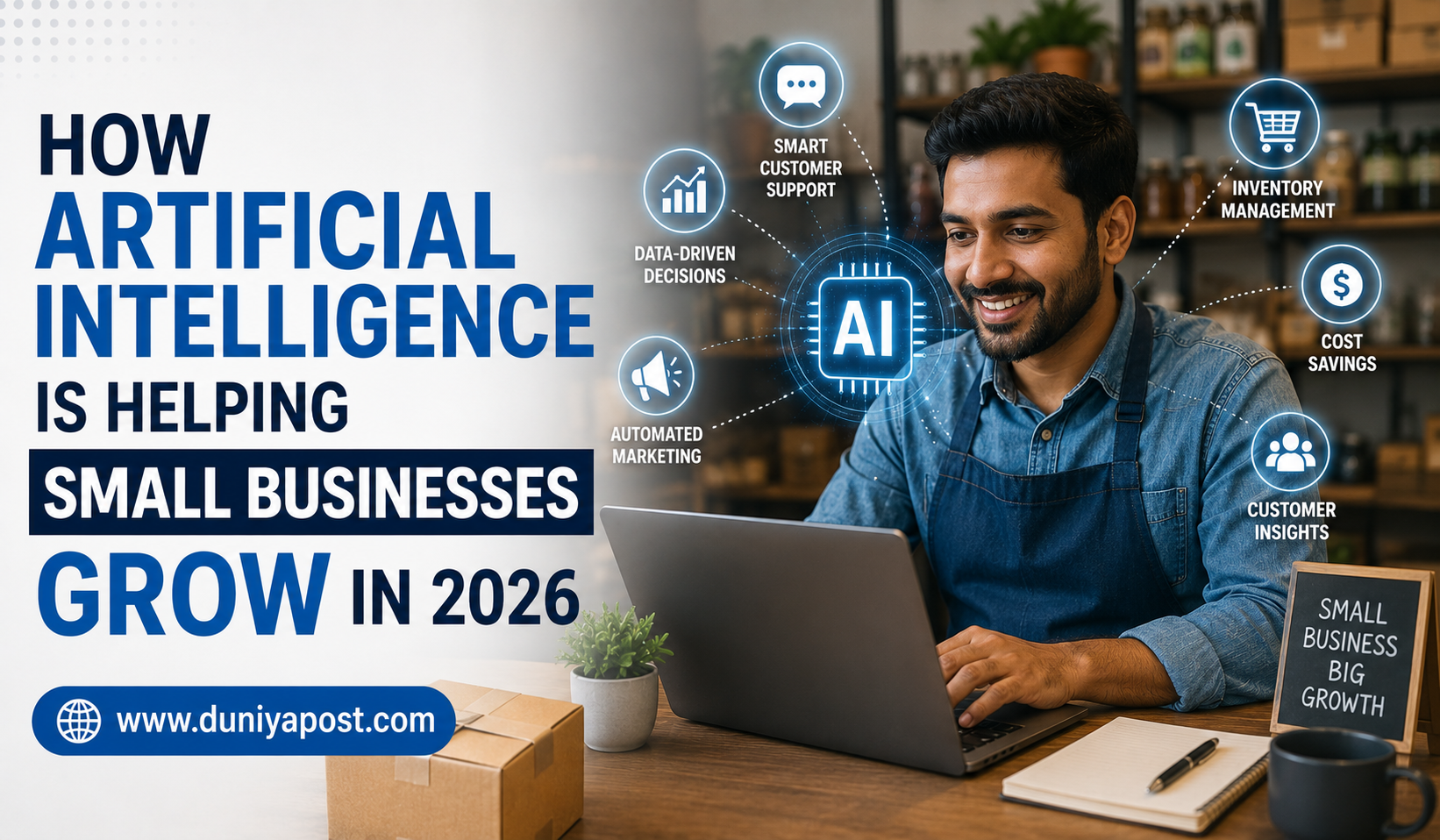
Artificial Intelligence (AI) is no longer a futuristic concept it has become an essential business tool. In 2026, AI is changing small businesses by helping owners automate daily tasks, improve customer experiences, reduce operating costs, and make smarter decisions. From local retail stores to online startups, businesses of every size are embracing AI to stay competitive in a rapidly evolving digital economy.
The biggest advantage is that AI is now affordable and easy to use. Entrepreneurs no longer need a large budget or technical expertise to benefit from AI-powered tools. Whether you’re running an e-commerce store, a marketing agency, a restaurant, or a home-based business, AI can streamline operations and improve productivity.
Why AI Is Important for Small Businesses in 2026?
Small businesses often work with limited budgets, smaller teams, and tight schedules. Owners manage everything from sales and customer service to accounting and marketing. These responsibilities can become overwhelming as the business grows.
Artificial Intelligence helps solve these challenges by automating repetitive work and providing valuable insights from business data. Instead of spending hours on manual tasks, entrepreneurs can focus on business growth, customer relationships, and innovation.
Businesses that adopt AI today are not only improving efficiency but also preparing for long-term success.
Top Ways AI Is Changing Small Businesses
- Customer Service Automation
AI-powered chatbots and virtual assistants answer customer questions instantly, provide product recommendations, and offer 24/7 support. This improves customer satisfaction while reducing support costs. - Content Creation and Digital Marketing
AI tools generate blog posts, social media captions, email campaigns, product descriptions, and advertising copy within minutes. This allows small businesses to maintain a consistent online presence and improve their SEO performance. - Smarter Financial Management
AI-powered accounting software automates bookkeeping, invoice creation, payroll processing, and expense tracking. Real-time financial reports help business owners make better financial decisions. - Inventory and Supply Chain Management
Retailers use AI to predict product demand, monitor inventory levels, and prevent stock shortages or overstocking. Better inventory planning improves profitability and customer satisfaction. - Sales Forecasting and Lead Generation
AI analyzes customer behavior and identifies potential buyers. CRM systems powered by AI recommend follow-up actions, helping businesses close more sales with less effort. - Personalized Customer Experiences
AI studies customer preferences and purchase history to recommend products and services that match individual interests. Personalization increases customer engagement and encourages repeat business. - Data Analysis for Better Decisions
AI processes large amounts of business data in seconds, helping owners identify trends, monitor performance, and predict future opportunities. Data-driven decisions reduce business risks. - Recruitment and Human Resources
AI simplifies hiring by screening resumes, scheduling interviews, and matching candidates with job requirements. It also supports employee training and workforce management. - Cybersecurity Protection
AI continuously monitors business systems for suspicious activities and detects potential cyber threats before they become major problems, helping protect valuable business and customer data. - Business Automation and Productivity
From scheduling meetings to organizing documents and responding to emails, AI automates routine tasks so entrepreneurs can focus on growing their businesses.
Benefits of AI for Small Businesses
The adoption of AI offers numerous advantages beyond automation. Businesses can reduce operating costs, improve efficiency, deliver faster customer service, and make more informed decisions. AI also minimizes manual errors and enables entrepreneurs to scale their operations without significantly increasing expenses.
As AI tools continue to evolve, they are becoming an essential investment rather than an optional technology.
Challenges of Adopting AI
Despite its many benefits, implementing AI requires careful planning. Business owners should choose AI tools that align with their specific needs instead of adopting every new technology available.
Employee training is equally important. Teams need to understand how to work alongside AI systems to maximize productivity. Businesses must also prioritize data privacy and ensure customer information is protected.
The most successful companies use AI to enhance human capabilities rather than replace employees.
Future Trends: How AI Is Changing Small Businesses Beyond 2026
The future of AI looks even more promising. Emerging technologies are expected to deliver smarter virtual assistants, advanced predictive analytics, AI-powered voice search, automated customer engagement, and intelligent business planning.
Generative AI will continue transforming marketing, product development, and customer communication. Small businesses that invest in AI today will be better prepared to compete with larger organizations in the years ahead.
Tips for Small Businesses to Start Using AI
If you’re new to AI, start with one or two tools that solve your biggest business challenges. Focus on automating repetitive tasks, improving customer service, or creating marketing content. As you become more comfortable with AI, gradually expand its use into finance, sales, inventory management, and business analytics.
The key is to treat AI as a business assistant that helps your team work more efficiently instead of replacing human creativity and decision-making.
Conclusion
Understanding how AI is changing small businesses is essential for entrepreneurs who want to remain competitive in 2026 and beyond. Artificial Intelligence is helping businesses improve customer service, automate operations, optimize marketing, strengthen cybersecurity, manage finances, and make smarter business decisions.
As AI technology becomes more affordable and accessible, its adoption will continue to grow across every industry. Small businesses that embrace AI today will gain a significant competitive advantage, increase productivity, reduce costs, and build stronger relationships with their customers.
If you want your business to thrive in the digital era, now is the perfect time to start integrating AI into your daily operations.