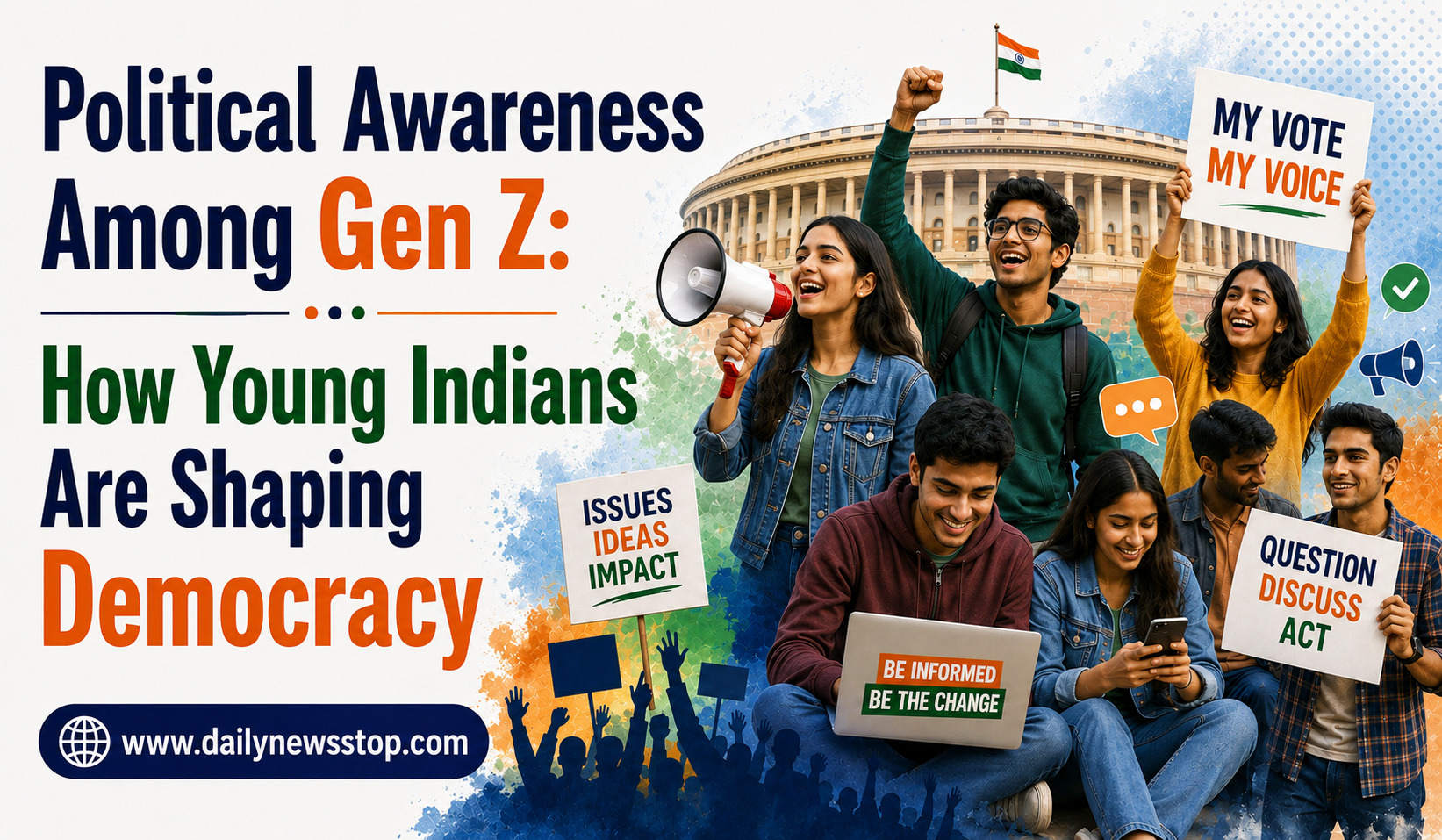
India is home to one of the largest youth populations in the world, and Generation Z (Gen Z) roughly those born between the 1997 and 2012 is emerging as a powerful force in the country’s democratic journey. Unlike previous generations, Gen Z has grown up in a world shaped by smartphones, social media, instant access to information, and constant digital connectivity. As a result, their relationship with politics is different, more interactive, and often more issue-driven.
Political awareness among young Indians is no longer limited to election season discussions or classroom debates. Gen Z is increasingly engaging with topics such as employment, education, climate change, gender equality, digital rights, public policy, and governance. Through online platforms and community participation, they are influencing political conversations in ways that were difficult to imagine just a decade ago.
This growing awareness is important because democracy becomes stronger when young citizens understand public issues, participate responsibly, and hold institutions accountable. Gen Z is not only preparing to inherit India’s future it is already helping shape it.
Who Is Gen Z?
Gen Z is often described as the first truly digital-native generation. Most young Indians in this age group have grown up with the internet, social media platforms, online education, and digital communication tools as a normal part of daily life.
This constant exposure to information has made them more aware of national and global developments. News about elections, government policies, international conflicts, environmental issues, and social movements reaches them almost instantly through multiple digital channels.
Unlike earlier generations that depended heavily on newspapers, radio, or television, Gen Z consumes information from a combination of traditional media, online news portals, podcasts, YouTube channels, and social media discussions.
Why Political Awareness Is Growing Among Young Indians
Several factors have contributed to the rise of political awareness among Gen Z in India. The most significant is the easy availability of information. Young people can now access speeches, parliamentary debates, policy documents, fact-checking platforms, and expert opinions directly from their phones.
Another reason is that many public issues have a direct impact on their future. Questions related to higher education, competitive examinations, job opportunities, startup ecosystems, digital infrastructure, and environmental sustainability are closely connected to the aspirations of young Indians.
As these issues affect their careers, economic security, and quality of life, Gen Z has become more interested in understanding how government decisions are made and how public policies influence society.
Social Media Has Changed Political Engagement
Social media has played a transformative role in shaping political awareness among young Indians. Platforms such as Instagram, X (formerly Twitter), YouTube, and Facebook have become spaces where political discussions, policy explanations, interviews, debates, and awareness campaigns reach millions of young users every day.
Short videos, infographics, podcasts, and live discussions make complex political issues easier to understand. Young people can follow political leaders, journalists, researchers, economists, activists, and public policy experts directly, giving them access to a wider range of perspectives than ever before.
This direct access has reduced the distance between citizens and public institutions, encouraging greater participation in democratic conversations.
From Passive Voters to Active Participants
One of the most important changes is that many members of Gen Z are no longer satisfied with being passive observers of politics. They increasingly participate in discussions, share opinions, attend public events, volunteer for social causes, and engage in community initiatives.
Young Indians are using digital tools to raise awareness about local problems such as poor infrastructure, environmental pollution, public transportation, waste management, and access to education or healthcare. In many cases, these local concerns become part of larger public conversations that attract media and political attention.
This shift from passive consumption to active participation is an encouraging sign for democratic engagement.
The Issues That Matter to Gen Z
While traditional political debates often focused heavily on ideology or party loyalty, Gen Z tends to be more issue-oriented. Employment opportunities remain one of the biggest concerns for young Indians, especially in a rapidly changing economy influenced by technology and automation.
Education quality, affordable higher education, skill development, entrepreneurship support, and digital access are also major priorities. Many young citizens are equally concerned about climate change, sustainable development, mental health awareness, gender equality, and online privacy.
These priorities are influencing political parties, which increasingly address youth-related issues in their manifestos, speeches, and policy announcements.
Digital Literacy and Political Awareness
Access to information alone does not guarantee informed political awareness. The digital age has also brought challenges such as misinformation, fake news, manipulated videos, and misleading social media content.
Gen Z is often exposed to an enormous volume of political information every day, making digital literacy extremely important. The ability to verify sources, compare multiple viewpoints, identify biased content, and distinguish facts from opinions is becoming an essential democratic skill.
Educational institutions, media organizations, and families all have a role to play in helping young citizens develop critical thinking and responsible information habits.
The Influence of Campus and Youth Discussions
Colleges, universities, and youth forums continue to be important spaces for political awareness. Discussions on public policy, constitutional rights, economic reforms, social justice, environmental protection, and governance encourage students to think beyond textbooks and engage with real-world issues.
Debates, model parliaments, student publications, and civic engagement programs help young people understand democratic institutions and the responsibilities that come with citizenship.
Such experiences often create a foundation for long-term political participation and informed voting behaviour.
How Gen Z Is Influencing Political Parties
Political parties have recognized that young voters represent a significant and growing electoral force. As a result, they are adapting their communication strategies to connect with Gen Z more effectively.
Digital campaigns, interactive social media content, youth-focused policy announcements, online town halls, and direct engagement through influencers and content creators have become increasingly common.
Parties are also paying greater attention to issues such as startup funding, digital innovation, education reform, skill development, sports, and environmental sustainability because these topics resonate strongly with younger audiences.
In this way, Gen Z is influencing not only election outcomes but also the policy priorities of political organizations.
Civic Engagement Beyond Elections
Political awareness is not limited to voting. Many young Indians are participating in civic engagement activities such as environmental campaigns, blood donation drives, disaster relief efforts, educational volunteering, and community development projects.
These activities help build a sense of social responsibility and demonstrate that democracy involves continuous participation in improving society, not just choosing representatives during elections.
When young citizens engage with their communities, they gain a better understanding of how public institutions function and how collective action can create positive change.
Challenges Facing Politically Aware Youth
Despite growing awareness, Gen Z also faces several challenges. Information overload can make it difficult to separate important issues from sensational content. Social media algorithms sometimes create echo chambers, where users are exposed mainly to opinions that reinforce their existing beliefs.
Political polarization can discourage constructive dialogue, while excessive focus on online debates may reduce meaningful offline engagement with communities and institutions.
Another challenge is maintaining interest in long-term policy issues rather than only reacting to viral political events. Sustainable democratic participation requires patience, research, and continued engagement with public affairs.
Why Gen Z Matters for Indian Democracy
India’s democracy depends heavily on the participation of its younger generations. As millions of Gen Z citizens become eligible voters, their choices will influence the country’s political direction, economic priorities, social policies, and governance models for decades to come.
A politically aware youth population can strengthen democracy by demanding transparency, supporting evidence-based policymaking, encouraging accountability, and participating in informed public debate. Young citizens often bring fresh perspectives, technological understanding, and greater openness to new ideas and reforms.
Their engagement can also encourage political leaders to focus more seriously on education, employment, innovation, climate resilience, and inclusive development.
The Future of Political Awareness Among Gen Z
The influence of Gen Z on Indian democracy is likely to grow even stronger in the coming years. Advances in digital technology, online education, AI-driven information platforms, and interactive civic tools will continue to shape how young people learn about politics and participate in governance.
Future political engagement may become more decentralized, with citizens contributing through digital consultations, policy discussions, community platforms, and issue-based campaigns alongside traditional electoral participation.
However, the long-term success of this transformation will depend on promoting media literacy, constitutional awareness, respectful dialogue, and responsible use of digital platforms.
Conclusion
Political awareness among Gen Z is becoming one of the most significant developments in contemporary Indian democracy. Empowered by digital connectivity, access to information, and a strong interest in issues that affect their future, young Indians are participating in political conversations with increasing confidence and visibility.
They are influencing public debates, shaping policy priorities, encouraging greater accountability, and redefining what democratic participation looks like in the digital age. While challenges such as misinformation and polarization remain, the growing engagement of informed young citizens offers an important opportunity for strengthening India’s democratic institutions.
Ultimately, Gen Z is not just the future of Indian democracy—it is already an active force in shaping its present. By staying informed, thinking critically, participating responsibly, and engaging constructively with public issues, young Indians have the potential to build a more transparent, inclusive, and participatory democracy for the generations to come.