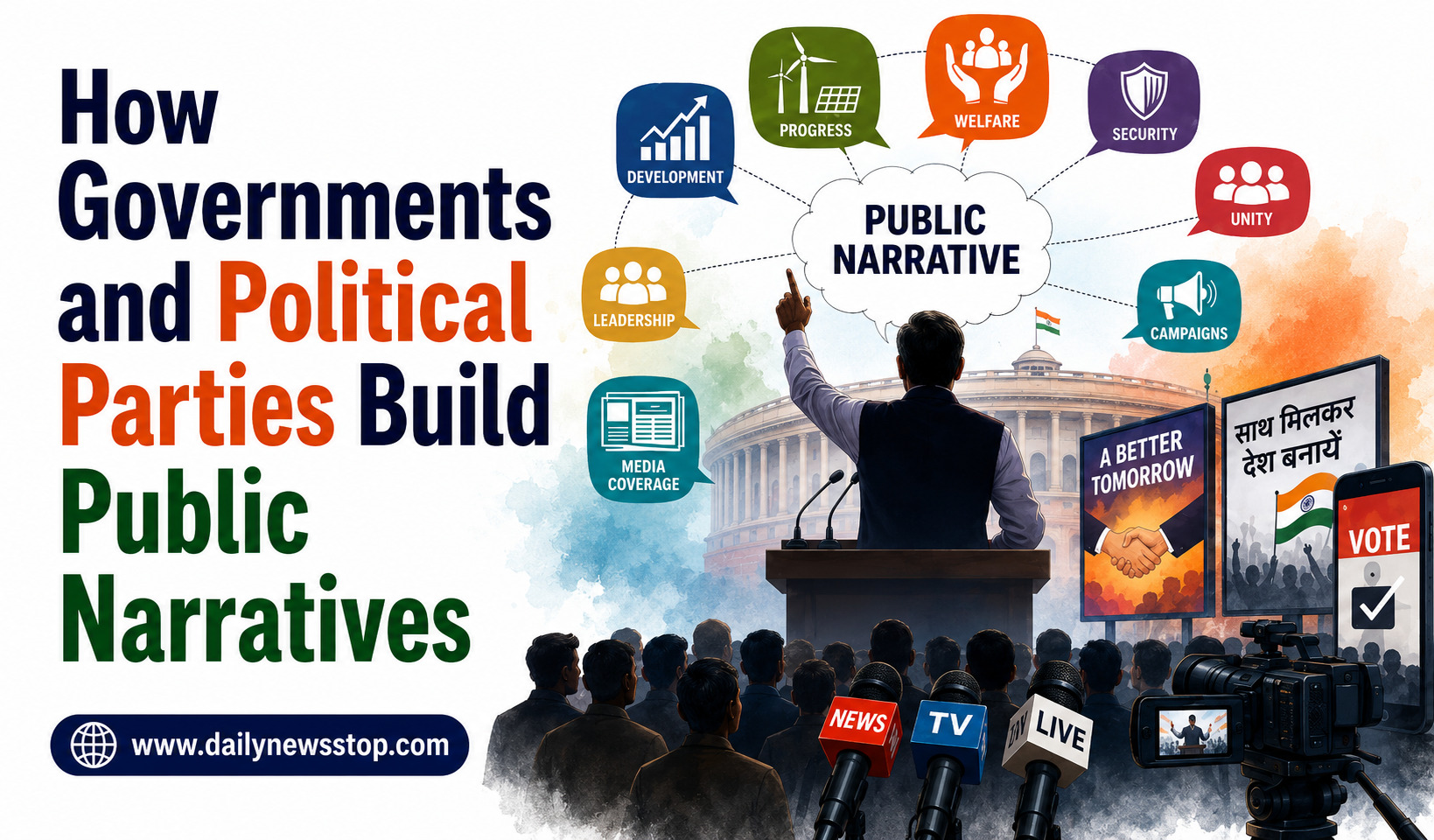
Every government and political party communicates with the public in an effort to explain its vision, priorities, and decisions. The stories, messages, and themes used to present these ideas are often referred to as public narratives. These narratives help people understand political issues, government policies, election promises, and national developments in a way that is easier to relate to.
Public narratives are a normal part of democratic politics. They are used to explain why certain policies are introduced, what problems they aim to solve, and how political leaders view the country’s future. Whether the topic is economic development, education, healthcare, national security, or environmental protection, political communication often relies on carefully constructed narratives to connect with citizens.
In today’s digital age, public narratives travel faster than ever before. Television, newspapers, online news portals, podcasts, and social media have transformed how political messages reach people. As a result, understanding how these narratives are created and communicated has become an important part of being an informed citizen.
What Is a Public Narrative?
A public narrative is a structured way of presenting political ideas, government actions, or social issues through stories, themes, and messages. Rather than simply sharing facts or statistics, political communication often places those facts within a broader context that explains why an issue matters and what solutions are being proposed.
For example, a government introducing a new infrastructure project may present it as part of a larger narrative about economic growth, employment, and national development. Similarly, an opposition party may frame the same issue from a different perspective by focusing on implementation, accountability, or alternative policy approaches.
In a democracy, multiple narratives often exist at the same time, allowing citizens to hear different viewpoints before forming their own opinions.
Why Narratives Matter in Politics
Politics involves making decisions that affect society, and those decisions need to be communicated clearly. Public narratives help simplify complex issues by explaining policies in language that ordinary citizens can understand.
Economic reforms, healthcare initiatives, education policies, tax changes, and environmental regulations often involve technical details. Through narratives, political leaders explain the purpose of these policies, the problems they seek to address, and the expected benefits.
Effective communication helps citizens understand government priorities and encourages greater public engagement in democratic discussions.
How Governments Build Public Narratives
Governments usually build public narratives around their policy goals and development plans. Every administration seeks to communicate its achievements, explain ongoing projects, and outline future objectives.
Official speeches, parliamentary discussions, government websites, press conferences, policy documents, public awareness campaigns, and media interviews all contribute to this communication process.
For instance, when introducing a new welfare programme, the government may explain how it aims to improve access to healthcare, education, housing, or employment. The narrative helps place the policy within a broader vision of national development.
Governments also communicate during emergencies such as natural disasters or public health crises. In such situations, clear and consistent messaging becomes essential for maintaining public confidence and encouraging cooperation.
How Political Parties Develop Their Narratives
Political parties build narratives to explain their ideology, policy priorities, and vision for the country. These narratives help distinguish one party from another and provide voters with an understanding of what each party stands for.
Before elections, parties often present narratives based on economic growth, governance, employment, social welfare, education, infrastructure, or national security. Campaign speeches, election manifestos, advertisements, public meetings, and interviews are used to communicate these ideas.
Opposition parties also develop narratives by offering alternative viewpoints on government policies and proposing different solutions to national challenges. This exchange of ideas is an important feature of democratic competition.
The Role of Media in Shaping Narratives
The media plays a central role in how political narratives reach the public. Newspapers, television channels, radio stations, online news platforms, and digital publications report on political developments, interview leaders, and analyze policy decisions.
Journalists provide information that helps citizens understand different perspectives on current issues. Editorials, debates, documentaries, and opinion articles contribute to broader public discussion.
In a democratic society, independent and responsible journalism supports informed decision-making by presenting verified information and encouraging balanced public debate.
Social Media Has Changed Political Communication
The growth of social media has transformed the way governments and political parties communicate.
Unlike traditional media, where messages often passed through journalists before reaching audiences, social media allows political leaders to communicate directly with citizens. Updates, videos, speeches, live broadcasts, and policy announcements can now be shared instantly.
Citizens also participate actively by commenting, sharing opinions, asking questions, and engaging in public discussions. This has made political communication faster and more interactive than ever before.
At the same time, the speed of social media has increased the importance of verifying information before accepting or sharing it.
The Importance of Language and Storytelling
Facts and data are important, but people often connect more easily with stories. Political communication frequently uses examples, personal experiences, historical references, and relatable situations to explain broader policy objectives.
A discussion about healthcare may include stories about improving medical access in rural areas. Education reforms may be explained through examples of how better schools can improve opportunities for future generations.
Storytelling helps make complex policies easier to understand while creating stronger emotional connections with audiences.
Public Opinion and Political Narratives
Public opinion develops through a combination of personal experiences, news reporting, public discussions, educational background, and political communication.
Political narratives contribute to this process by highlighting particular issues and explaining them from specific perspectives. Citizens then compare different viewpoints, evaluate available information, and form their own opinions.
In healthy democracies, public opinion is influenced by open debate rather than by a single source of information. Exposure to multiple viewpoints allows citizens to make more informed decisions.
Challenges in the Digital Age
Modern political communication also faces significant challenges.
The rapid spread of information online makes it easier for accurate news to reach large audiences quickly. However, it also creates opportunities for misinformation, manipulated content, and unverified claims to circulate widely.
Artificial intelligence has introduced additional concerns through AI-generated text, images, audio, and videos that can appear highly realistic. These developments make media literacy increasingly important.
Citizens benefit from checking information through credible sources before accepting or sharing political content.
The Importance of Transparency
Public trust depends heavily on transparency and accountability.
Governments strengthen public confidence by providing clear information about policies, explaining decision-making processes, and responding openly to public concerns. Political parties also build credibility by communicating their ideas honestly and consistently.
Transparency encourages informed public debate and helps citizens evaluate political messages based on evidence rather than assumptions.
A democratic society functions best when communication is open, respectful, and fact-based.
Why Citizens Should Understand Political Narratives
Understanding political narratives does not require supporting or opposing any particular party. Instead, it involves recognizing how political communication works and evaluating messages thoughtfully.
An informed citizen considers different viewpoints, examines available evidence, and distinguishes between verified information and opinion. This approach encourages critical thinking and responsible democratic participation.
Political narratives become more meaningful when citizens understand both the message being communicated and the broader context in which it is presented.
The Future of Political Communication
Political communication will continue evolving as technology advances. Artificial intelligence, data analysis, digital broadcasting, multilingual communication tools, and interactive online platforms are likely to become even more important in future election campaigns and governance.
Governments and political parties will continue looking for new ways to engage citizens, while media organizations will adapt to changing technologies and audience expectations.
At the same time, democratic values such as transparency, accountability, freedom of expression, and responsible journalism will remain essential for maintaining public trust.
Conclusion
Public narratives are an essential part of democratic politics. They help governments explain policies, enable political parties to present their ideas, and encourage citizens to participate in discussions about national issues. From traditional newspapers to digital platforms and social media, the methods of building and sharing these narratives have changed dramatically over time.
While technology has made political communication faster and more accessible, it has also increased the need for careful fact-checking, media literacy, and responsible public discourse. Citizens today have access to more information than ever before, but they also have a greater responsibility to evaluate that information critically.
Ultimately, strong democracies are built on informed citizens who are willing to listen to different perspectives, question information thoughtfully, and participate respectfully in public debate. Understanding how governments and political parties build public narratives is an important step toward becoming a more informed and engaged participant in the democratic process.