
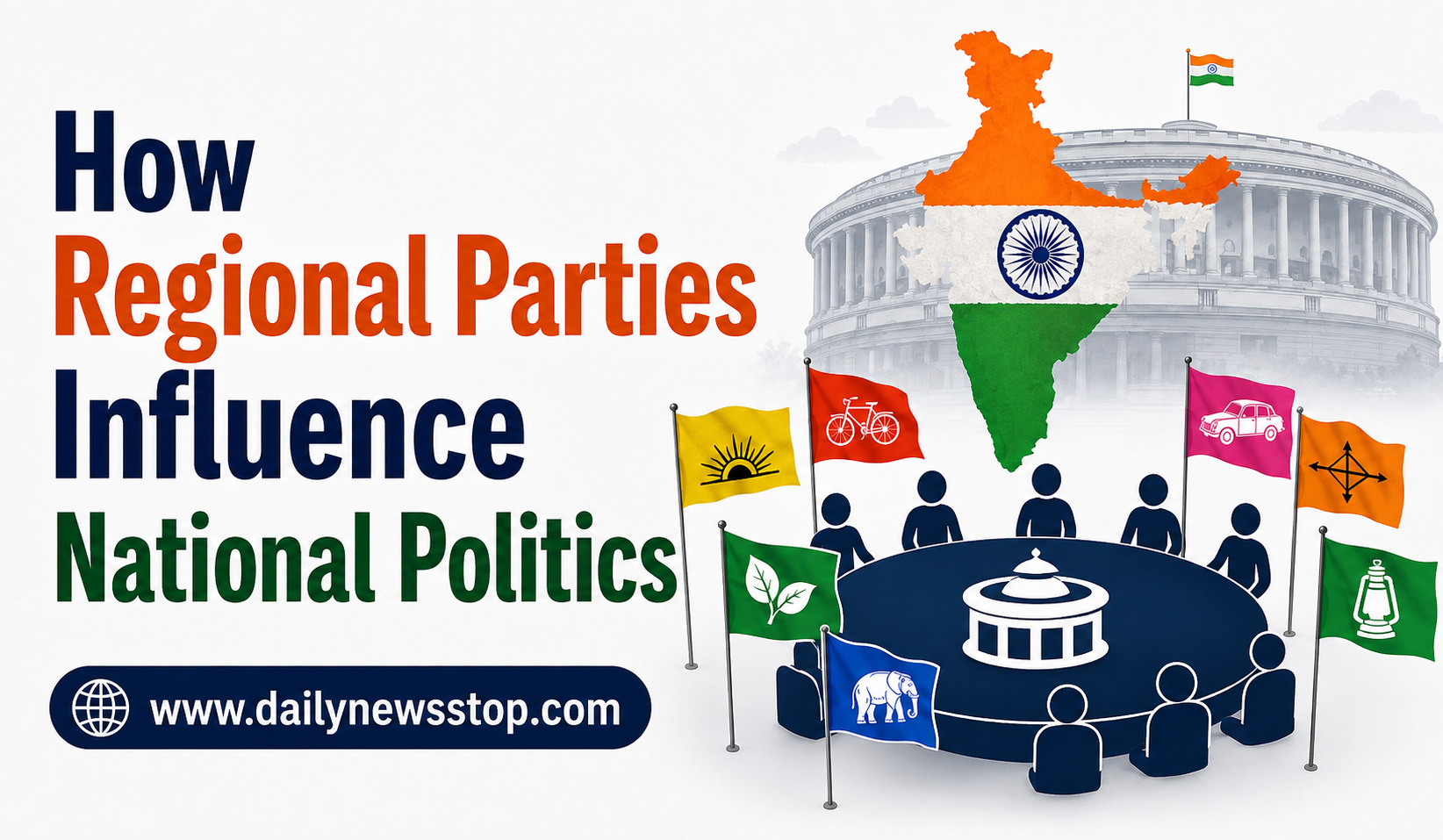
India is the world’s largest democracy, known for its diversity in languages, cultures, traditions, and regional identities. This diversity is reflected not only in society but also in its political system. Alongside national political parties, regional parties have become an important force in shaping the country’s governance and policymaking.
While regional parties primarily focus on the interests and aspirations of specific states or regions, their influence often extends beyond state boundaries. In many instances, they play a decisive role in forming governments at the Centre, influencing national legislation, and shaping public policy. Their growing presence has made Indian politics more representative of the country’s diverse population.
Understanding the role of regional parties helps explain how India’s federal system functions and why coalition politics has become an important feature of the nation’s democratic process.
What Are Regional Parties?
Regional parties are political organizations whose primary support base is concentrated in one or more states rather than across the entire country. These parties usually focus on issues that are particularly important to their region, such as local development, cultural identity, language, agriculture, employment, infrastructure, or state-specific economic concerns.
Although their electoral presence may be geographically limited, regional parties often represent millions of voters. Their strong connection with local communities allows them to understand regional priorities and advocate for them in state legislatures as well as in Parliament.
In India’s parliamentary system, regional parties contribute to ensuring that national governance reflects the interests of different parts of the country.
Why Regional Parties Have Grown in Importance
The rise of regional parties is closely linked to India’s social and cultural diversity. Different states face different economic conditions, development needs, and political challenges. As a result, many voters choose parties that focus specifically on local issues affecting their daily lives.
Economic development, regional aspirations, linguistic identity, and demands for greater administrative attention have all contributed to the growth of regional political movements.
Over the years, improvements in democratic participation and increased political awareness have also enabled regional leaders to build strong public support based on state-specific priorities.
Giving States a Stronger Voice
One of the most important contributions of regional parties is that they strengthen the voice of states in national policymaking.
India follows a federal system in which powers are shared between the Union Government and state governments. Regional parties help ensure that decisions made at the national level consider the unique needs of different states.
Whether the issue involves infrastructure projects, financial assistance, agricultural policies, industrial development, or disaster management, regional parties often advocate for policies that benefit their respective states.
This strengthens cooperative federalism by encouraging dialogue between the Centre and the states.
Their Role in Coalition Governments
Regional parties have become especially influential during periods when no single national party secures a clear majority in the Lok Sabha.
In such situations, coalition governments often rely on the support of regional parties to form a stable majority. Their participation can influence government formation, Cabinet composition, and policy priorities.
Coalition politics encourages negotiation, consultation, and compromise among different political parties. While this process can sometimes make decision-making more complex, it also allows a broader range of regional interests to be represented in national governance.
The ability of regional parties to influence coalition governments demonstrates their growing importance in India’s parliamentary democracy.
Influencing National Policies
Although regional parties focus primarily on state-level issues, they often contribute to national policy discussions as well.
Members of Parliament from regional parties participate in debates, examine proposed legislation, and express the concerns of their constituencies. Their perspectives help ensure that policies consider the diverse social, economic, and cultural realities across the country.
In many cases, regional parties advocate for increased investment in infrastructure, improved public services, agricultural support, industrial development, and greater financial assistance for their states.
Their participation broadens national discussions by bringing regional experiences into policymaking.
Protecting Regional Identity
India’s cultural diversity is one of its greatest strengths, and regional parties often play an important role in preserving local identities.
Many regional parties promote the protection of regional languages, cultural traditions, historical heritage, and local customs. They also support policies aimed at preserving literature, arts, festivals, and educational initiatives that reflect regional identities.
This emphasis on cultural representation contributes to India’s democratic character by ensuring that different communities continue to have a voice within the national political system.
Improving Democratic Representation
Regional parties increase political participation by giving voters additional choices beyond national political organizations.
Citizens who feel that local concerns require greater attention may choose regional parties that focus specifically on issues affecting their communities. This broadens democratic representation and encourages greater political engagement.
A wider range of political voices also strengthens parliamentary debates by bringing different viewpoints into discussions on national development.
Economic Development and Regional Priorities
Economic conditions vary significantly across India’s states. Some regions prioritize industrial growth, while others focus on agriculture, tourism, fisheries, manufacturing, or infrastructure development.
Regional parties often advocate for investments that align with the strengths and requirements of their states. They may seek improved transportation networks, better irrigation systems, educational institutions, healthcare facilities, or financial support for local industries.
By highlighting these priorities, regional parties contribute to more balanced national development.
Challenges Associated with Regional Politics
While regional parties make valuable contributions to democracy, their growing influence also presents certain challenges.
Coalition governments involving multiple parties may require extensive negotiations before major policy decisions are made. Balancing national priorities with regional demands can sometimes slow the policymaking process.
Regional interests may also differ from one state to another, requiring governments to carefully balance competing expectations while ensuring equitable development across the country.
Despite these challenges, democratic dialogue and constitutional institutions help manage differences through discussion and consensus-building.
Regional Parties in Parliament
The Indian Parliament provides regional parties with an important platform to participate in national decision-making.
Members representing regional parties contribute to legislative debates, committee discussions, and policy reviews. Their participation ensures that issues affecting different parts of the country receive national attention.
Parliamentary committees, in particular, provide opportunities for members from various political backgrounds to examine proposed laws in greater detail and recommend improvements before legislation is finalized.
This collaborative process strengthens democratic governance and encourages informed policymaking.
The Future of Regional Politics
Regional parties are expected to remain influential in India’s political landscape. As states continue to pursue economic growth, technological development, and improved public services, regional leadership is likely to play an important role in addressing local aspirations.
Future political debates may increasingly focus on urban development, digital governance, environmental sustainability, employment generation, healthcare, education, and infrastructure.
Regional parties will continue adapting to these changing priorities while working alongside national parties within India’s federal democratic framework.
Their ability to balance local interests with national development goals will remain important in shaping the country’s political future.
Conclusion
Regional parties have become an essential part of India’s democratic system. By representing state-specific concerns, strengthening federalism, participating in coalition governments, and contributing to national policymaking, they help ensure that India’s diversity is reflected in its governance.
Their influence demonstrates that national politics is not shaped solely by large national parties but also by organizations that represent regional aspirations and local priorities. This diversity of political voices enriches parliamentary debate and strengthens democratic participation.
As India continues to evolve socially, economically, and politically, regional parties are likely to remain key contributors to the country’s governance. Their role in connecting local concerns with national decision-making reflects the strength of India’s federal structure and its commitment to inclusive democracy.