
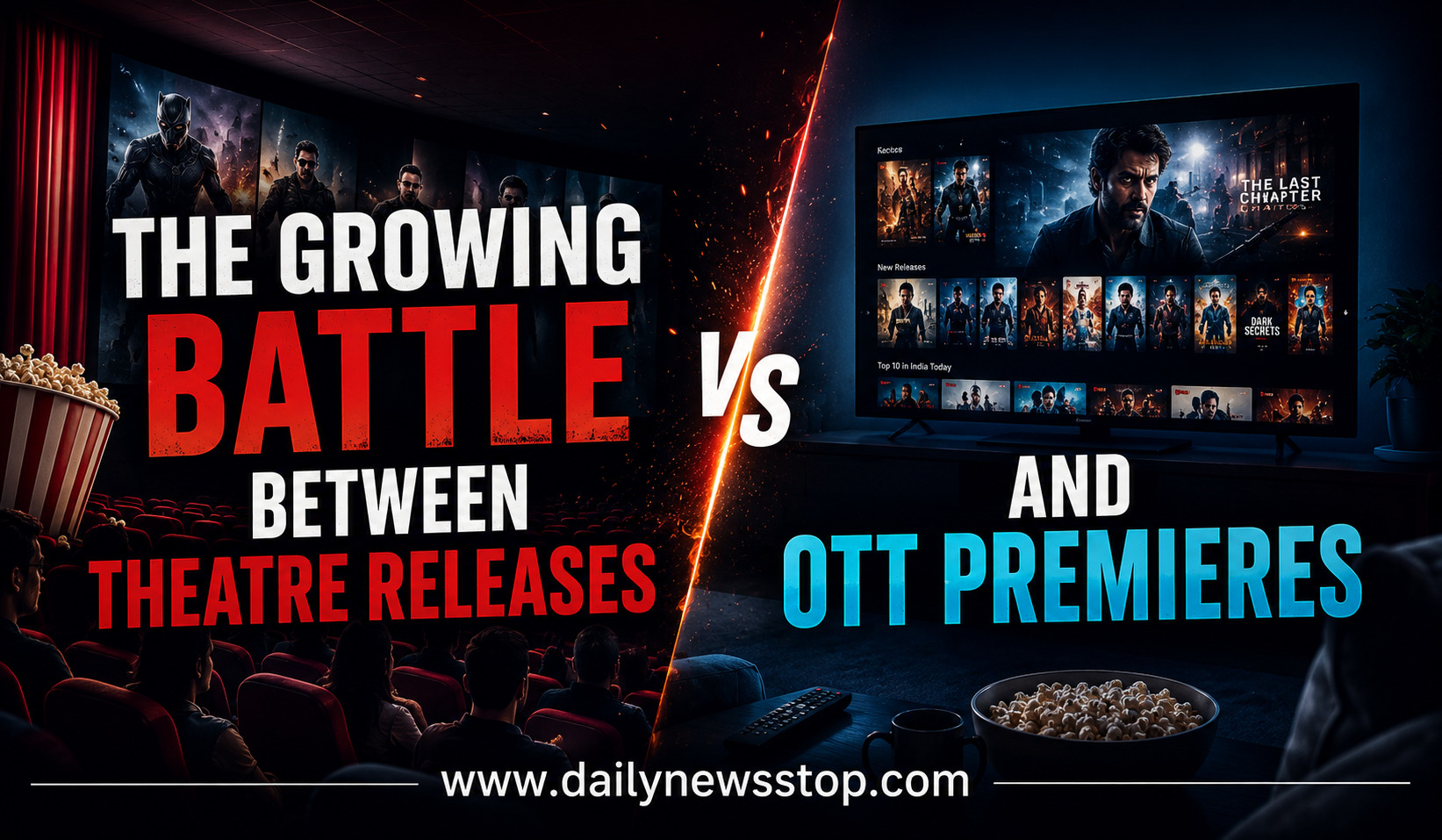
The way people watch movies has changed dramatically over the last few years. Going to a cinema was once the default choice for anyone who wanted to watch a newly released film. Today, audiences have another powerful option: waiting for the movie to arrive on a streaming platform.
This has created an increasingly interesting competition between theatre releases and OTT premieres. While cinemas continue to offer the big-screen experience, OTT platforms provide convenience, flexibility, and access to a huge library of content from home.
The debate is no longer simply about whether people prefer theatres or streaming. It is about which type of release makes sense for different kinds of movies and different audiences.
As the entertainment industry continues to evolve, studios, filmmakers, cinema chains, and streaming platforms are all trying to understand what viewers really want.
Why Theatrical Releases Still Matter
Despite the growth of streaming platforms, theatres continue to hold an important place in the movie business.
Watching a film on a large screen is fundamentally different from watching it on a television, laptop, or smartphone. The size of the screen, surround sound, dark environment, and collective audience experience can make major films feel like events.
This is especially true for action movies, large-scale visual spectacles, science-fiction films, superhero stories, and movies designed around elaborate cinematography.
For these productions, the theatrical experience can be an important part of the filmmaker’s vision.
There is also a social aspect to going to the cinema. People often watch movies with friends and family, eat together, discuss the film afterward, and turn a movie outing into an experience.
That emotional and social element is difficult to completely recreate at home.
Why Audiences Love OTT Premieres
At the same time, OTT platforms have changed audience expectations by making entertainment more convenient.
Viewers no longer need to plan a trip to the cinema, buy tickets, travel, find parking, or follow a fixed showtime.
They can simply choose a movie and watch it from home.
This convenience is particularly attractive to people with busy schedules.
OTT platforms also allow audiences to pause a movie, take a break, watch it later, or choose subtitles and language options.
For many viewers, this flexibility has become a normal part of entertainment consumption.
The ability to watch films on televisions, computers, tablets, and smartphones has made streaming extremely accessible.
The Biggest Difference: Experience vs Convenience
At the heart of the theatre-versus-OTT debate is a simple difference.
Theatres sell an experience. OTT platforms sell convenience.
A cinema offers a large screen, powerful sound, and a shared environment. Streaming offers comfort and control.
Neither option is automatically better.
The choice often depends on the type of film and the viewer’s priorities.
Someone may happily pay for a theatrical experience when a major action film arrives but prefer watching a small family drama at home.
This distinction is becoming increasingly important for studios when deciding how to release a movie.
Not Every Movie Needs a Theatrical Release
One of the biggest changes in the entertainment industry is the growing recognition that not every film needs to follow the traditional theatrical model.
Large-scale productions with significant visual effects, popular stars, and strong franchise connections may benefit from cinemas.
Smaller films may have difficulty competing for screens, marketing attention, and audience interest against major releases.
For these films, an OTT premiere can provide access to a much larger potential audience.
Instead of depending on a limited theatrical run, a movie can reach viewers across different cities and even different countries through a streaming platform.
This can give filmmakers opportunities that may not have been possible through traditional distribution.
The Importance of Box Office Numbers
For the film industry, theatrical releases provide an important measurement of performance: box office revenue.
A strong opening weekend can generate significant publicity and create a sense that a movie is an event.
When audiences see reports of a film crossing major box-office milestones, curiosity can increase.
This can create a positive cycle in which commercial success becomes part of the marketing.
OTT platforms operate differently.
Streaming services generally do not provide the same level of publicly available box-office information. Instead, they may evaluate a title using metrics such as views, completion rates, watch time, subscriber activity, and audience engagement.
This makes the definition of a “successful movie” more complicated.
The Changing Release Window
Another major part of the competition involves the time between a theatrical release and its OTT premiere.
Traditionally, audiences expected to wait for a significant period before a movie became available outside cinemas.
Today, that gap can be much shorter for some films.
This has created an interesting situation.
If audiences know that a movie will arrive on streaming relatively soon, some may decide to wait rather than purchase a cinema ticket.
For viewers who are particularly price-conscious, the decision can be simple: why pay for a theatre ticket when the same movie will soon be available through a subscription?
This creates a challenge for cinema businesses.
Will Shorter OTT Windows Hurt Theatres?
A shorter gap between theatrical and streaming releases can potentially affect cinema attendance, particularly for films that are not viewed as must-see theatrical events.
If people believe they can watch a movie at home shortly after its release, the urgency to see it in theatres may decline.
However, major films can still create strong theatrical demand.
When audiences believe a movie is worth experiencing on a big screen, they may choose not to wait.
This suggests that the future may not involve the complete replacement of theatres by OTT platforms.
Instead, the two formats may increasingly serve different purposes.
The Rise of Event Cinema
One possible future for theatres is the growth of “event cinema.”
This means movies become major cultural events rather than simply another form of entertainment.
Big franchise films, highly anticipated sequels, major star vehicles, and visually spectacular productions can generate excitement that encourages audiences to watch them immediately.
Social media contributes to this effect.
People do not want to be left out of conversations surrounding a major release. They may avoid spoilers by watching a film during its opening weekend.
This creates an advantage that OTT platforms cannot always replicate.
OTT Is Expanding the Global Audience
One of the strongest advantages of streaming is its ability to cross geographical boundaries.
A film released through an OTT platform can potentially reach audiences in multiple countries without requiring the same physical distribution network as a theatrical release.
Subtitles and dubbing can also introduce movies to viewers who might never have encountered them through traditional cinema distribution.
This has helped regional Indian cinema reach wider audiences.
A viewer in one part of India can discover a film from another language and culture with only a few clicks.
As a result, streaming has expanded the potential audience for many types of Indian storytelling.
The Competition Is Also Changing Filmmaking
The battle between theatres and OTT is not only about distribution.
It is influencing what kinds of stories filmmakers create.
Theatrical films often need strong visual appeal and a compelling reason for audiences to leave home.
OTT productions can take more time with character development and complex narratives.
A streaming movie does not necessarily need the same large-scale spectacle to attract viewers.
This has encouraged filmmakers to experiment with different formats, genres, story lengths, and narrative structures.
The result is a broader entertainment landscape.
Audience Behaviour Is Becoming More Selective
Perhaps the biggest change is that audiences now have more choices than ever.
A viewer can decide to watch a film in a theatre, wait for its OTT release, watch a web series, discover an international movie, or simply spend the evening watching short-form videos.
This abundance of choice has made audiences more selective.
They are increasingly asking themselves whether a movie is worth the time and money required for a theatrical visit.
If the answer is yes, cinemas can still benefit enormously.
If not, OTT may become the preferred option.
The Future May Be a Hybrid Model
Instead of treating theatres and OTT as completely opposing forces, the industry may gradually move toward a hybrid model.
A film could receive a carefully planned theatrical release before reaching streaming audiences later.
Large productions can use cinemas to create excitement and generate box-office revenue, while OTT distribution can provide the film with a longer life.
Smaller productions may use streaming as their primary distribution channel while reserving theatrical releases for selected markets.
This approach allows different films to follow different strategies rather than forcing every movie into the same release model.
What Audiences Can Expect Next
The competition between theatre releases and OTT premieres is likely to continue as technology, audience habits, and business models evolve.
Cinema chains will need to focus on improving the overall experience. Better screens, sound systems, comfortable seating, premium formats, food options, and special events can make theatrical visits feel more valuable.
OTT platforms, meanwhile, will continue investing in original films, exclusive premieres, regional content, and international productions.
Studios will have to decide carefully where each film belongs.
The biggest question may no longer be, “Should this movie release in theatres or on OTT?”
Instead, it may become:
“What is the best way to give this particular movie the audience it deserves?”
Conclusion
The growing battle between theatre releases and OTT premieres is changing the entertainment industry, but it does not necessarily mean that one format will completely replace the other.
Theatres continue to offer something unique: the excitement of watching a film on a giant screen alongside other people. OTT platforms offer something equally powerful: convenience, flexibility, affordability, and an enormous range of content.
The future is likely to belong to both.
Movies that benefit from spectacle, scale, and shared experiences may continue to thrive in theatres, while smaller, experimental, niche, and character-driven stories may find strong audiences through streaming.
Ultimately, audiences are gaining the most from this competition. They have more choices, more content, and more ways to enjoy movies than ever before.
The entertainment industry is therefore not simply witnessing a battle between cinemas and streaming. It is witnessing the creation of a new movie-watching culture one where the audience has more control than ever over when, where, and how a story is experienced.