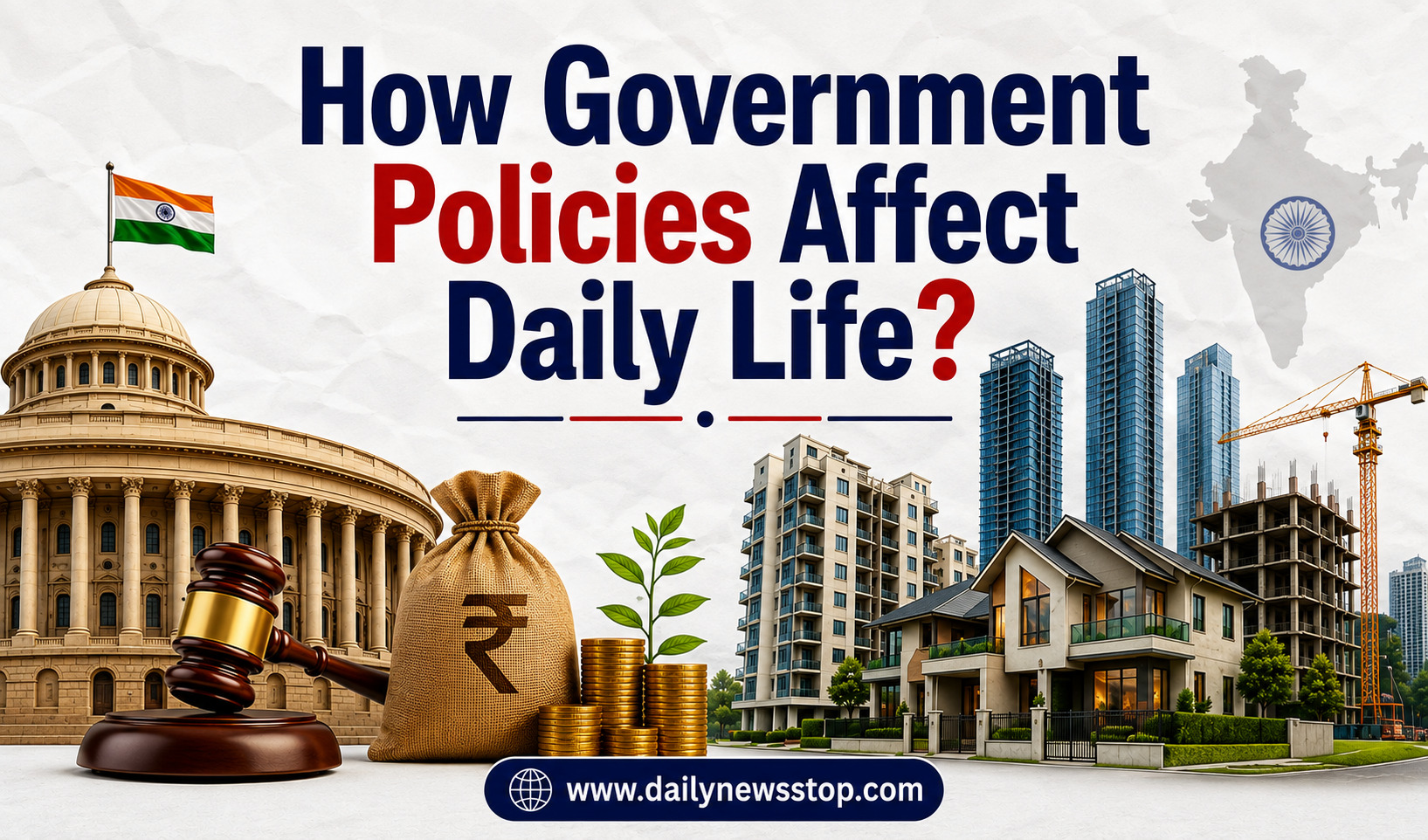
Government policies may seem like topics discussed only in Parliament, government offices, or news debates, but they have a direct impact on the everyday lives of citizens. From the moment we switch on the electricity in our homes to the roads we travel on, the schools our children attend, and the healthcare services we access, government policies influence countless aspects of daily life.
Policies are created to address public needs, solve social and economic challenges, and promote national development. While some policies produce immediate changes, others gradually shape society over many years. Whether they relate to education, healthcare, taxation, infrastructure, agriculture, or technology, government decisions affect individuals, families, businesses, and communities across the country.
Understanding how these policies work helps citizens appreciate the connection between governance and everyday experiences. It also encourages informed participation in democratic processes and greater awareness of how public decisions influence society.
What Are Government Policies?
Government policies are plans and decisions adopted by public authorities to achieve specific goals. They provide direction for how governments respond to issues such as economic development, public health, environmental protection, education, transportation, and national security.
Policies are usually based on research, public consultations, expert recommendations, and administrative planning. Once approved, they are implemented through government departments, public institutions, and various development programs.
Some policies are designed to solve immediate challenges, while others aim to create long-term improvements that benefit future generations.
The Impact on Household Finances
One of the most noticeable effects of government policy is on personal finances. Decisions related to taxation, inflation management, subsidies, and public spending influence the cost of living for every household.
Changes in tax rates can affect disposable income, while policies supporting essential goods or public services may help reduce financial burdens on families. Government investment in economic growth can also create employment opportunities, increase business activity, and improve income levels.
Similarly, policies aimed at controlling inflation or supporting financial stability influence the prices people pay for food, fuel, transportation, and other everyday necessities.
Education Policies Shape Future Opportunities
Education is one of the sectors most directly influenced by government decisions. Policies determine curriculum standards, teacher training, school infrastructure, scholarship programs, and access to higher education.
Governments also introduce initiatives to improve digital learning, encourage skill development, and increase educational opportunities in rural and underserved areas.
These decisions have long-term effects because they influence the quality of education students receive and the opportunities available to future generations. Investments in education contribute not only to personal development but also to national economic growth.
Healthcare Policies Affect Every Family
Healthcare policies influence how medical services are delivered and how accessible they are to the public. Decisions regarding hospitals, vaccination programs, disease prevention, health insurance, medical education, and public awareness campaigns all shape the country’s healthcare system.
Strong healthcare policies improve access to treatment, strengthen emergency response systems, and encourage preventive care. During public health emergencies, effective policymaking becomes especially important in coordinating medical resources and protecting public safety.
For many families, healthcare policies determine both the availability and affordability of essential medical services.
Infrastructure Improves Everyday Convenience
Infrastructure projects are often among the most visible outcomes of government policy. Roads, bridges, railways, airports, public transportation systems, electricity networks, water supply projects, and digital connectivity all result from long-term planning and public investment.
Improved infrastructure reduces travel time, supports businesses, enhances public safety, and creates employment opportunities during construction and maintenance.
Better infrastructure also contributes to regional development by connecting remote communities with markets, healthcare facilities, educational institutions, and employment opportunities.
Employment and Business Growth
Government policies play a major role in creating an environment where businesses can grow and generate employment. Regulations concerning industries, investments, taxation, labour, entrepreneurship, and innovation influence economic activity across different sectors.
Policies that encourage startups, manufacturing, digital technology, and infrastructure development can create new job opportunities while strengthening the overall economy.
For workers, employment policies also affect workplace safety, skill development, labour rights, and career opportunities.
Technology and Digital Governance
Technology has transformed the way governments deliver services to citizens. Many public services that once required lengthy paperwork can now be accessed online.
Citizens can apply for documents, pay taxes, access welfare benefits, and communicate with government departments through digital platforms. This has improved convenience, increased transparency, and reduced administrative delays in many areas.
At the same time, governments continue developing policies related to cybersecurity, digital privacy, artificial intelligence, and responsible use of technology to address emerging challenges in the digital age.
Environmental Policies Protect Communities
Environmental policies influence the quality of the air people breathe, the water they drink, and the natural resources available for future generations.
Governments introduce regulations aimed at reducing pollution, conserving forests, protecting wildlife, promoting renewable energy, and encouraging sustainable development. These policies seek to balance economic growth with environmental responsibility.
As climate change becomes a growing global concern, environmental policymaking has become increasingly important in protecting public health and supporting long-term development.
Social Welfare and Public Support
Governments often introduce welfare policies to support economically vulnerable sections of society. These programs may focus on food security, housing, pensions, scholarships, rural development, or financial assistance for eligible beneficiaries.
Such policies aim to reduce inequality and improve access to basic services. When implemented effectively, they contribute to social stability and create opportunities for individuals to improve their quality of life.
Public welfare remains an important component of governance because it reflects the government’s commitment to inclusive development.
Law, Order, and Public Safety
Government policies also influence public safety through laws, policing, disaster management, and emergency response systems. Regulations related to road safety, consumer protection, workplace standards, and crime prevention help maintain order and protect citizens.
During emergencies such as floods, earthquakes, or public health crises, coordinated government policies enable authorities to respond efficiently and provide assistance to affected communities.
Effective governance in these areas strengthens public confidence in democratic institutions.
Why Citizen Participation Matters?
Government policies become more effective when citizens actively participate in democratic processes. Voting, public consultations, community discussions, and constructive feedback allow people to express their priorities and contribute to policymaking.
An informed citizen is better able to understand why certain decisions are made and how they affect society. Public awareness also encourages accountability by enabling citizens to evaluate the performance of governments based on policy outcomes rather than political rhetoric alone.
Democracy functions most effectively when governments and citizens engage with each other through open communication and responsible participation.
Challenges in Policymaking
Creating policies that benefit a country as large and diverse as India is not always straightforward. Governments must consider regional differences, economic conditions, available resources, and the needs of different communities before introducing new initiatives.
Even well-designed policies require efficient implementation, regular monitoring, and cooperation between central, state, and local authorities. Unexpected global events, technological changes, and economic uncertainties can also influence how policies perform over time.
For this reason, policymaking is a continuous process of evaluation and improvement rather than a one-time decision.
Looking Ahead
As society evolves, government policies will continue adapting to meet new challenges. Advances in technology, urbanization, climate change, demographic shifts, and changing economic conditions are creating new priorities for policymakers.
Future policies are likely to place greater emphasis on sustainable development, digital governance, innovation, public healthcare, education, and employment generation. Data-driven decision-making and greater public participation may also improve the effectiveness of governance.
For citizens, understanding these developments will become increasingly important as policy decisions continue shaping everyday experiences.
Conclusion
Government policies are far more than official announcements or legislative documents. They influence the roads we travel on, the schools we attend, the healthcare we receive, the taxes we pay, the jobs we pursue, and the environment in which we live. Their impact reaches almost every aspect of daily life, often in ways that are not immediately visible.
By understanding how policies are developed and implemented, citizens become better equipped to participate in democratic processes and make informed decisions about issues affecting their communities. Awareness also encourages greater accountability and strengthens the relationship between governments and the people they serve.
Ultimately, effective government policies are measured not only by their objectives but by their ability to improve people’s lives. When thoughtfully designed and responsibly implemented, they become powerful tools for promoting development, strengthening democracy, and building a more inclusive and prosperous society.