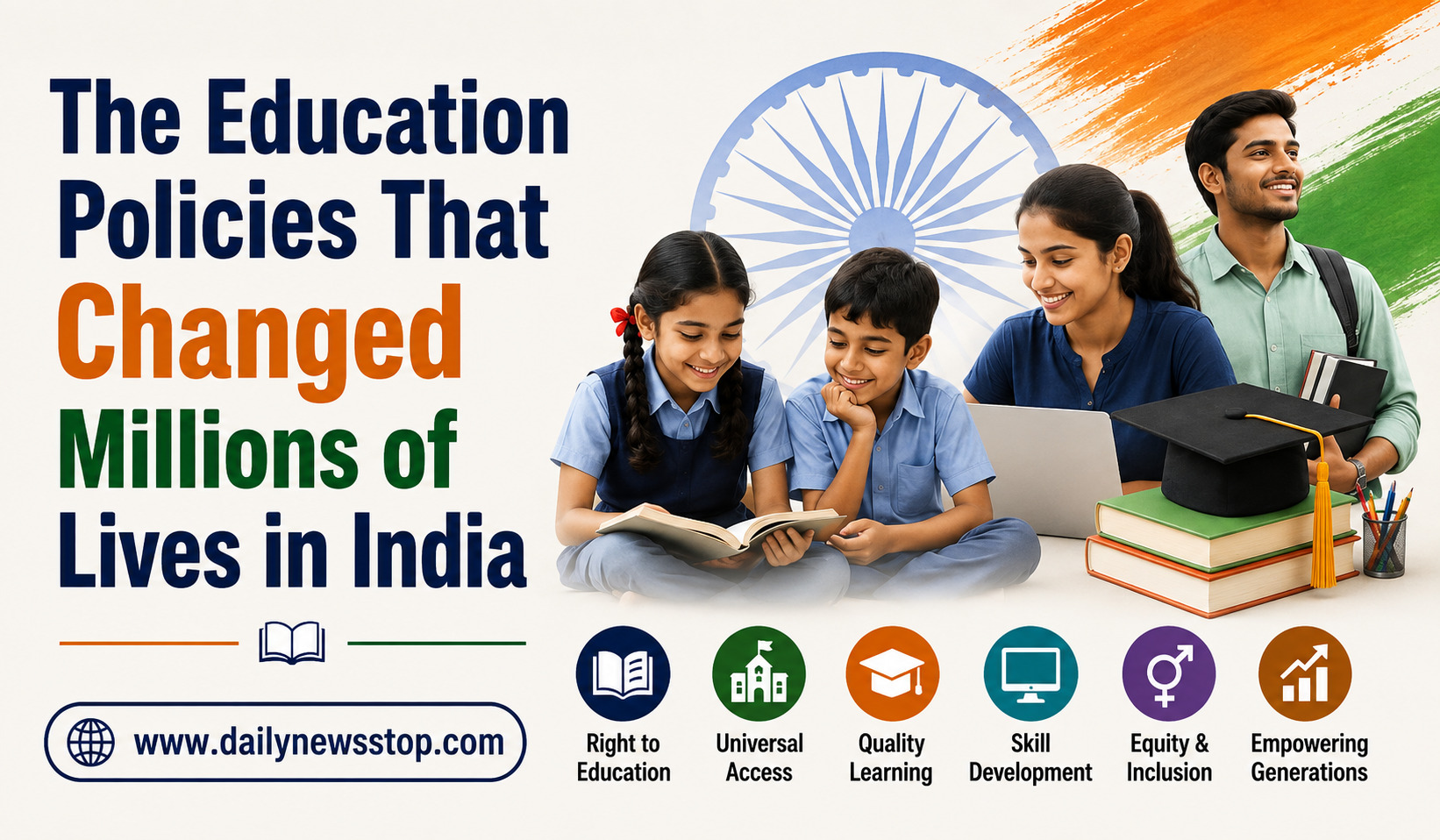
Education has always been one of the most powerful tools for shaping a nation’s future. In a country as diverse and populous as India, educational reforms have played a crucial role in improving literacy, expanding access to schools, promoting higher education, and preparing young people for a rapidly changing world. Over the decades, several education policies have transformed the way learning is delivered, making it more inclusive, accessible, and aligned with the country’s social and economic goals.
Government policies in education are not just about classrooms and textbooks. They influence teacher training, curriculum design, skill development, digital learning, research, and equal opportunities for students from different backgrounds. Many of the improvements seen in India’s education system today are the result of long-term policy decisions that aimed to make quality education available to a larger section of society.
This article explores some of the most significant education policies that have shaped modern India and examines their impact on students, teachers, and the country’s overall development.
Why Education Policy Matters
An education policy provides a framework for how learning should be organized, funded, and improved. It guides decisions related to school infrastructure, curriculum, examinations, teacher recruitment, higher education, vocational training, and educational technology.
A well-designed policy does more than increase school enrolment. It seeks to improve learning outcomes, encourage critical thinking, reduce educational inequality, and prepare students with the knowledge and skills needed for future careers.
In a developing economy like India, education policy also supports broader national objectives such as economic growth, social mobility, innovation, and workforce development.
The National Policy on Education, 1968
One of India’s earliest comprehensive education reforms came with the National Policy on Education (NPE) of 1968. Based on the recommendations of the Kothari Commission, it laid the foundation for a more coordinated national approach to education.
The policy emphasized equal educational opportunities, improvement in teaching standards, and the expansion of education across the country. It also promoted the three-language formula to encourage linguistic diversity while strengthening national integration.
Although India still faced significant challenges in literacy and school infrastructure at the time, this policy marked an important step toward recognizing education as a national priority.
The National Policy on Education, 1986
Nearly two decades later, the National Policy on Education, 1986 introduced a broader vision for educational development. It placed greater emphasis on universal access to elementary education and improving educational opportunities for women, rural communities, and socially disadvantaged groups.
The policy encouraged adult literacy, teacher training, vocational education, and the modernization of educational institutions. It also highlighted the importance of science and technology in preparing students for future economic development.
Several initiatives launched under this policy contributed to expanding educational access across different regions of the country.
The Right to Education Act
A major milestone in India’s educational journey came with the Right of Children to Free and Compulsory Education Act, commonly known as the Right to Education (RTE) Act. This legislation made education a legal right for children between the ages of 6 and 14 years.
The Act aimed to ensure that every child had access to free and compulsory elementary education without discrimination. It established standards for school infrastructure, teacher qualifications, and classroom facilities while encouraging greater accountability within the education system.
The RTE Act significantly increased awareness about the importance of universal education and strengthened efforts to improve school enrolment across the country.
Digital Learning Initiatives
Technology has transformed education in India over the past decade. Government initiatives promoting digital learning have expanded access to educational resources beyond traditional classrooms.
Online learning platforms, digital libraries, virtual classrooms, educational television channels, and e-learning portals have helped students access study materials regardless of location. These initiatives became particularly significant during periods when physical classroom learning was disrupted.
Although challenges related to internet connectivity and digital access remain, technology has created new opportunities for flexible and inclusive learning.
National Education Policy 2020
The National Education Policy (NEP) 2020 represents one of the most comprehensive educational reforms in recent years. It seeks to modernize India’s education system by promoting flexibility, multidisciplinary learning, critical thinking, and skill development.
The policy introduced changes in the structure of school education while encouraging greater emphasis on early childhood learning, experiential education, and conceptual understanding rather than rote memorization.
It also aims to strengthen vocational education, improve teacher training, expand research opportunities, and increase the use of technology in classrooms.
In higher education, the policy promotes multidisciplinary institutions, academic flexibility, and greater collaboration between universities and research organizations.
Expanding Access to Higher Education
Government policies have played an important role in increasing access to colleges and universities across India. Over the years, new institutions have been established while scholarship programs and financial assistance have supported students from economically weaker sections.
Efforts to improve technical education, professional courses, and research institutions have also contributed to the country’s growing knowledge economy.
Higher education policies continue to evolve to meet changing industry requirements and encourage innovation, entrepreneurship, and scientific research.
Skill Development and Employability
Modern education extends beyond academic learning. Policymakers increasingly recognize the importance of preparing students for employment through practical skills and vocational training.
Various initiatives have encouraged industry collaboration, entrepreneurship education, technical training, and professional certification. These efforts seek to reduce the gap between classroom education and workplace expectations.
As technology transforms industries, skill development policies continue adapting to prepare students for emerging careers in digital technologies, manufacturing, healthcare, renewable energy, and other growing sectors.
Promoting Inclusive Education
One of the major objectives of India’s education policies has been to make learning accessible to all sections of society. Governments have introduced measures aimed at reducing barriers faced by girls, children with disabilities, economically disadvantaged families, and students living in rural or remote areas.
Scholarships, residential schools, nutritional support, transportation assistance, and special educational programs have helped increase participation among groups that historically faced limited educational opportunities.
Inclusive education remains an ongoing priority because equal access to quality learning is essential for social and economic progress.
Challenges That Continue to Shape Education
Despite significant progress, India’s education system continues to face several challenges. Differences in educational quality between urban and rural areas, shortages of trained teachers in some regions, unequal access to digital resources, and varying learning outcomes remain important concerns.
Rapid technological change also requires continuous curriculum updates so that students develop relevant knowledge and practical skills.
Improving educational quality while ensuring equal opportunities across diverse regions remains one of the country’s most important long-term policy goals.
The Future of Education in India
India’s education system is entering a period of rapid transformation. Artificial intelligence, digital learning platforms, virtual laboratories, personalized education, and advanced research methods are likely to influence future classrooms.
Government policies are expected to place greater emphasis on innovation, critical thinking, creativity, environmental awareness, entrepreneurship, and lifelong learning.
Collaboration between educational institutions, industries, researchers, and policymakers will become increasingly important as the country prepares students for a global knowledge economy.
Future reforms will likely focus not only on increasing enrolment but also on improving learning outcomes and preparing students to solve complex real-world problems.
Conclusion
Education policies have played a defining role in shaping India’s social and economic development. From expanding access to schools and improving literacy to introducing digital learning and modern educational reforms, government initiatives have transformed opportunities for millions of students.
While each policy addressed the needs of its time, together they demonstrate India’s long-term commitment to strengthening education as a foundation for national progress. Challenges remain, particularly in ensuring quality and equal access, but continuous reforms reflect an ongoing effort to build a more inclusive and future-ready education system.
As India continues to evolve in an increasingly knowledge-driven world, education policies will remain central to preparing future generations with the skills, confidence, and opportunities needed to contribute to the country’s growth. Understanding these policies helps citizens appreciate how thoughtful planning in education can influence not only individual success but also the nation’s long-term development.