
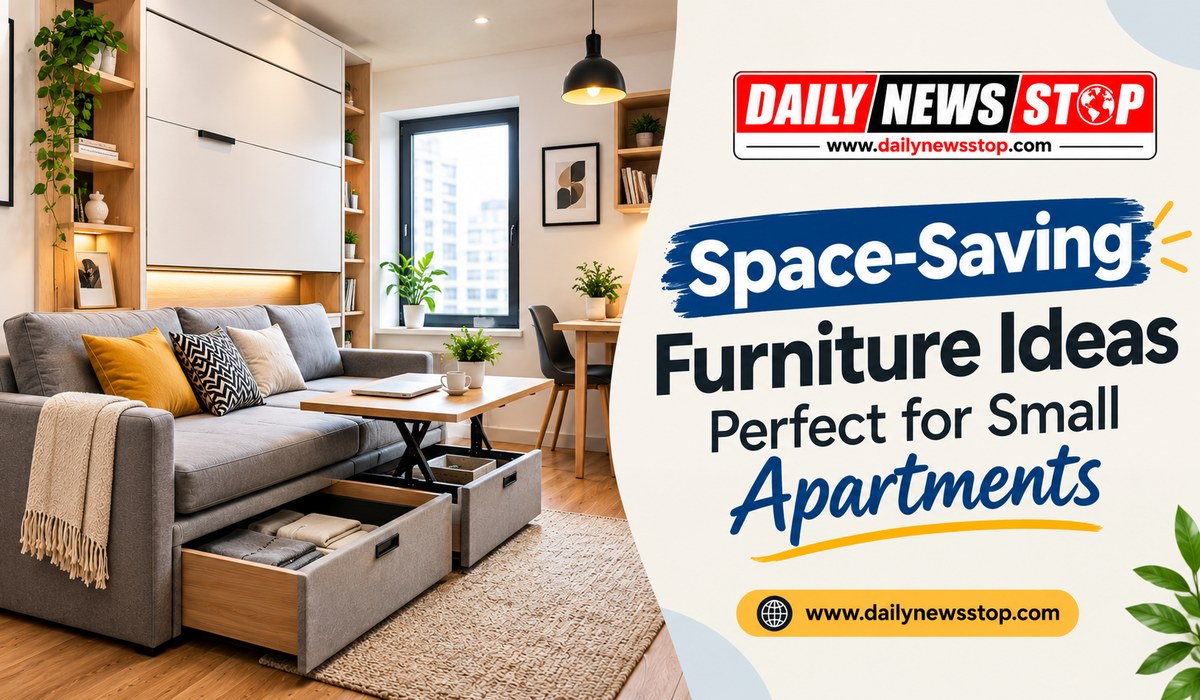
Living in a small apartment does not mean you have to sacrifice comfort, style, or functionality. With the right furniture choices, you can create a home that feels organised, spacious, and welcoming. The secret is to choose pieces that serve more than one purpose, use vertical space effectively, and leave enough room for everyday movement.
Space-saving furniture is especially useful when you live in a studio apartment, a compact city flat, or a home with limited storage. Instead of filling every corner with separate furniture, you can invest in practical designs that combine storage, seating, sleeping, and working areas.
In this guide, you will discover space-saving furniture ideas for small apartments that help you maximise available space without making your home feel crowded. From foldable tables to multifunctional beds, these ideas can help you create a stylish and comfortable living environment.
Why Space-Saving Furniture Matters in Small Apartments
Furniture plays an important role in how spacious a room feels. Oversized sofas, bulky cabinets, and unnecessary tables can quickly make a small apartment feel cramped. On the other hand, carefully selected furniture can improve both movement and storage.
Here are some benefits of choosing space-saving furniture:
- Better use of available space: Multifunctional furniture reduces the need for several separate pieces.
- Improved organisation: Hidden compartments provide places to store everyday belongings.
- Greater flexibility: Foldable and movable furniture allows you to change room layouts when needed.
- A cleaner appearance: Fewer bulky items help create a more open and organised atmosphere.
- Better functionality: One piece of furniture can support several activities, such as working, dining, and relaxing.
Moreover, space-saving furniture can make cleaning easier because you have fewer items occupying the floor. Therefore, the best furniture is not necessarily the smallest option but the one that offers the greatest value for your available space.
1. Choose a Sofa Bed for Your Living Room
A sofa bed is one of the most practical furniture choices for a small apartment. During the day, it functions as comfortable seating. At night, it can transform into a sleeping area for residents or overnight guests.
This option works particularly well in studio apartments where the living room also serves as a bedroom. Instead of purchasing a separate sofa and guest bed, you can use one piece for both purposes.
How to Choose the Right Sofa Bed
Before buying a sofa bed, measure the available floor area and check the dimensions when the bed is fully extended. A design that looks compact when folded may occupy considerably more space when opened.
Consider these features:
- A simple folding mechanism that is easy to operate.
- Comfortable cushions suitable for regular seating.
- A mattress that meets your sleeping needs.
- Storage compartments for bedding, if available.
- Upholstery that is easy to clean and maintain.
For a balanced appearance, choose a sofa bed with a streamlined frame and neutral upholstery. Add colourful cushions or a textured throw to introduce personality without overcrowding the room.
2. Install a Wall-Mounted Folding Desk
Working from home can be challenging when your apartment does not have a dedicated office. A wall-mounted folding desk provides a practical solution because it can be opened when needed and folded away afterwards.
Unlike a traditional office desk, this design does not permanently occupy valuable floor space. It is particularly useful in bedrooms, living rooms, and narrow study corners.
Make Your Compact Workspace Functional
Choose a desk with enough surface area for your laptop, notebook, and other essential items. If you need extra storage, consider a model with small shelves or compartments.
You can improve the workspace with a few simple additions:
- Install a small wall shelf for books and supplies.
- Use a compact chair that fits underneath the desk.
- Keep cables organised with clips or cable channels.
- Add a desk lamp if the area needs better lighting.
- Store stationery in a small organiser instead of spreading it across the surface.
When work is finished, fold the desk away and return the area to its original purpose. However, ensure that the desk is securely attached to a suitable wall and installed according to the manufacturer’s instructions.
3. Use a Storage Bed to Reduce Bedroom Clutter
Bedrooms often contain more belongings than expected, including extra pillows, blankets, seasonal clothing, and luggage. A storage bed helps you organise these items without adding another cabinet.
Depending on the design, storage beds may include drawers beneath the frame or a lift-up mattress platform that reveals a large compartment.
Which Storage Bed Should You Choose?
The best option depends on the layout of your bedroom.
Drawer storage beds are useful when you have enough clearance beside the bed to open the drawers. They provide convenient access to frequently used items.
Lift-up storage beds can offer more enclosed storage, although you need sufficient room to raise the mattress platform safely.
Beds with built-in shelves or headboard storage provide additional space for books, glasses, and small personal items.
Before purchasing a storage bed, check the location of wardrobes, doors, and bedside furniture. Also, make sure you can access the storage compartments without moving several other items.
4. Select a Drop-Leaf Dining Table
A traditional dining table can occupy a significant amount of space, even when nobody is using it. A drop-leaf table solves this problem with hinged sections that fold down when extra surface area is unnecessary.
You can keep the table compact for everyday use and extend it when friends or family visit. Some designs can also be placed against a wall to create a small dining corner.
Create a Flexible Dining Area
For a small apartment, choose a table that comfortably accommodates your usual household needs. Avoid purchasing an oversized table simply because you occasionally host guests.
Pair it with lightweight chairs that can be stacked or tucked underneath. Alternatively, a built-in bench with storage can help you make better use of a narrow dining area.
A drop-leaf table can also serve as a temporary work surface or a place for hobbies. As a result, you can use the same area for several activities throughout the day.
5. Invest in Nesting Tables
Nesting tables consist of two or more tables designed to fit underneath one another. They provide extra surface space when needed and can be grouped together to save room when not in use.
These tables are especially useful in compact living rooms where a large coffee table might restrict movement.
Practical Ways to Use Nesting Tables
- Place the largest table beside your sofa as a coffee table.
- Pull out the smaller tables when serving snacks or drinks.
- Use one table as a temporary laptop surface.
- Move a smaller table next to an armchair when reading.
- Separate the tables when you need additional surfaces for guests.
Choose lightweight designs that are easy to move around. Rounded edges may also be useful in narrow spaces where people frequently walk past the furniture.
For a cohesive look, match the table finish with other furniture in the room. However, combining different materials, such as wood and metal, can also create an attractive modern appearance.
6. Add Vertical Storage With Tall Shelving Units
When floor space is limited, look upwards. Tall shelving units allow you to use wall height for books, decorative objects, baskets, and household essentials.
Instead of spreading storage across several short cabinets, a well-planned vertical unit can organise many items within a relatively small footprint.
How to Use Vertical Storage Effectively
Place frequently used items on shelves that are easy to reach. Reserve higher shelves for lightweight belongings that you do not need every day.
Storage baskets can keep smaller objects together, while labelled containers make it easier to find things quickly.
You can also use vertical shelving to separate different areas in a studio apartment. For example, an open shelf placed between a bed and a living area can create a subtle visual boundary while still allowing light to pass through.
However, avoid filling every shelf with decorative objects. Leaving some open space creates a lighter appearance and prevents the unit from looking cluttered.
For safety, secure tall shelving units to the wall according to the manufacturer’s instructions, particularly if you have children or pets.
7. Choose an Ottoman With Hidden Storage
An ottoman is a versatile addition to a small apartment because it can provide seating, a footrest, and storage in one compact design.
Many ottomans have lift-up lids or removable tops that reveal space for blankets, magazines, toys, or other household items. Some models can also serve as a coffee table when paired with a suitable tray.
Where Should You Place a Storage Ottoman?
A storage ottoman can work in several locations:
- Living room: Store throws, remote controls, and other small items.
- Bedroom: Keep extra bedding or accessories within reach.
- Entryway: Provide a place to sit while putting on shoes.
- Study corner: Offer occasional additional seating.
Choose a size that suits the room rather than buying the largest available model. In a narrow living room, a compact rectangular ottoman may fit more easily beside a sofa than a large round design.
8. Use a Murphy Bed for a Studio Apartment
A Murphy bed, also called a wall bed, folds vertically or horizontally into a cabinet when it is not in use. This design can free up a substantial portion of the floor during the day.
It is particularly helpful in studio apartments where the bedroom and living room share the same space. When the bed is folded away, the area can be used for relaxing, exercising, or working.
What to Consider Before Buying a Murphy Bed
Murphy beds require careful planning because the frame, mattress, and folding mechanism must fit the room correctly.
Check the following points before installation:
- Measure the wall and the bed’s open and closed dimensions.
- Confirm that doors, windows, lights, and ceiling fixtures will not obstruct it.
- Choose a design suitable for your mattress size and weight.
- Follow the manufacturer’s installation and safety requirements.
- Consider professional installation when required by the product.
Some models include integrated desks, shelves, or cabinets. These combinations can be useful, although you should compare their cost and complexity with simpler furniture alternatives.
9. Try Extendable and Console Dining Tables
If your apartment has very little space for dining, an extendable table can provide flexibility without requiring a permanent large tabletop.
Some tables expand using additional leaves, while console-style designs can transform from narrow hallway furniture into a larger dining surface.
Make the Most of an Extendable Table
Keep the table in its smallest configuration for daily activities. Extend it when you need extra seating or workspace.
This approach is useful for people who live alone, couples, and small households that occasionally entertain guests.
Before buying, examine the extension mechanism and check where the additional panels will be stored. Also, measure the space around the table when it is fully extended to ensure that chairs can be moved comfortably.
10. Choose Furniture With Built-In Storage
Furniture with integrated storage helps you organise belongings without adding separate cabinets. This is especially valuable when every square foot matters.
Examples include:
- Beds with drawers or lift-up compartments.
- Sofas with storage beneath the seats.
- Coffee tables with shelves or drawers.
- Benches with hinged storage compartments.
- TV units with enclosed cabinets.
- Headboards with shelves for everyday essentials.
The most effective option depends on the items you need to store. For example, a storage bench near the entrance can hold shoes and bags, while a coffee table with drawers can keep remotes and magazines out of sight.
Nevertheless, avoid buying storage furniture simply because it has extra compartments. Consider whether the storage is easy to access and large enough for the belongings you intend to keep inside.
11. Use Stackable Chairs and Folding Stools
Extra seating is useful when guests visit, but keeping several chairs in a small apartment can make everyday life inconvenient.
Stackable chairs and folding stools provide a flexible alternative. You can store them in a cupboard, utility area, or suitable corner when they are not required.
How to Choose Compact Seating
Look for chairs that are lightweight without compromising stability. Check their maximum weight capacity and ensure they are designed for the intended use.
If you frequently host guests, consider stackable dining chairs that match your main furniture. For occasional use, folding stools may be sufficient.
Avoid placing folding chairs where they could block entrances or emergency exits. When not in use, store them securely so they do not fall or create a tripping hazard.
12. Select Furniture With Exposed Legs and a Light Visual Design
Space-saving furniture is not only about hidden compartments and folding mechanisms. The visual design of a piece can also influence how spacious a room feels.
Furniture with exposed legs allows more of the floor to remain visible. This can make a small living room or bedroom feel less crowded than a similar space filled with bulky, floor-to-ceiling furniture.
Light-coloured finishes, simple silhouettes, and appropriately scaled pieces can also help create a more open appearance.
Create a Spacious Look Without Major Changes
Try these simple ideas:
- Choose a sofa that fits the room rather than one with oversized arms.
- Use a coffee table with a slim frame.
- Select furniture with visible floor clearance where practical.
- Keep large pieces away from windows when possible.
- Use mirrors to reflect light and create a greater sense of depth.
- Leave clear walking paths between furniture pieces.
Although light colours can make a room feel brighter, you do not need to use white everywhere. Warm wood tones, soft beige, muted green, and other gentle shades can also create a welcoming interior.
Common Mistakes to Avoid When Buying Space-Saving Furniture
Even practical furniture can create problems when it does not suit your apartment. Before making a purchase, avoid these common mistakes.
Buying Furniture Without Measuring
Always measure the room, doorways, staircases, and lift access where relevant. For foldable or extendable furniture, check both the open and closed dimensions.
Choosing Too Many Multifunctional Pieces
Furniture that performs several functions can be useful, but too many mechanisms may make a room feel complicated. Choose pieces that solve genuine problems instead of buying every available space-saving product.
Ignoring Comfort
A compact sofa, folding chair, or sofa bed should still be comfortable for its intended purpose. Check the seat depth, mattress quality, support, and ease of use before purchasing.
Forgetting About Storage Access
A bed with large drawers may be impractical if a wardrobe blocks them. Similarly, a folding table may not work if nearby furniture prevents it from opening fully.
Overlooking Durability and Safety
Inspect the hinges, supports, wheels, and folding mechanisms. Follow weight limits and installation instructions, and secure tall furniture where recommended.
Key Takeaways
- Space-saving furniture helps small apartments feel more organised and functional.
- Sofa beds and Murphy beds combine sleeping arrangements with flexible living space.
- Folding desks and drop-leaf tables are useful for homes with limited room for work or dining.
- Storage beds, ottomans, and multifunctional benches help reduce clutter.
- Tall shelves make better use of vertical space.
- Stackable chairs and nesting tables provide flexibility without permanently occupying extra floor area.
- Measure furniture carefully and prioritise comfort, durability, and safe installation.
When furnishing a small apartment, choosing pieces that save space without sacrificing comfort can make every corner more useful. The same approach works well for compact outdoor areas, so explore these best foldable furniture options for small balconies to create a practical and comfortable balcony without overcrowding it.
Frequently Asked Questions
1. What is the best space-saving furniture for a small apartment?
Sofa beds, storage beds, folding desks, nesting tables, and multifunctional ottomans are useful options because they combine practical functions with efficient space usage.
2. How can I make a small apartment look bigger with furniture?
Choose appropriately sized furniture, keep walking paths clear, use lighter visual designs, and avoid filling every corner with cabinets or decorative items.
3. Is multifunctional furniture worth buying?
Yes, multifunctional furniture can be a worthwhile investment when you regularly use its different features and it offers reliable construction and adequate comfort.
4. How can I create a workspace in a small apartment?
A wall-mounted folding desk, compact chair, vertical shelves, and organised cable management can help create a functional workspace without taking up much floor area.
5. How do I choose furniture for a studio apartment?
Prioritise pieces that support your daily routine, such as a sofa bed, storage furniture, a compact dining table, and movable seating, while ensuring the layout leaves enough room to move comfortably.