
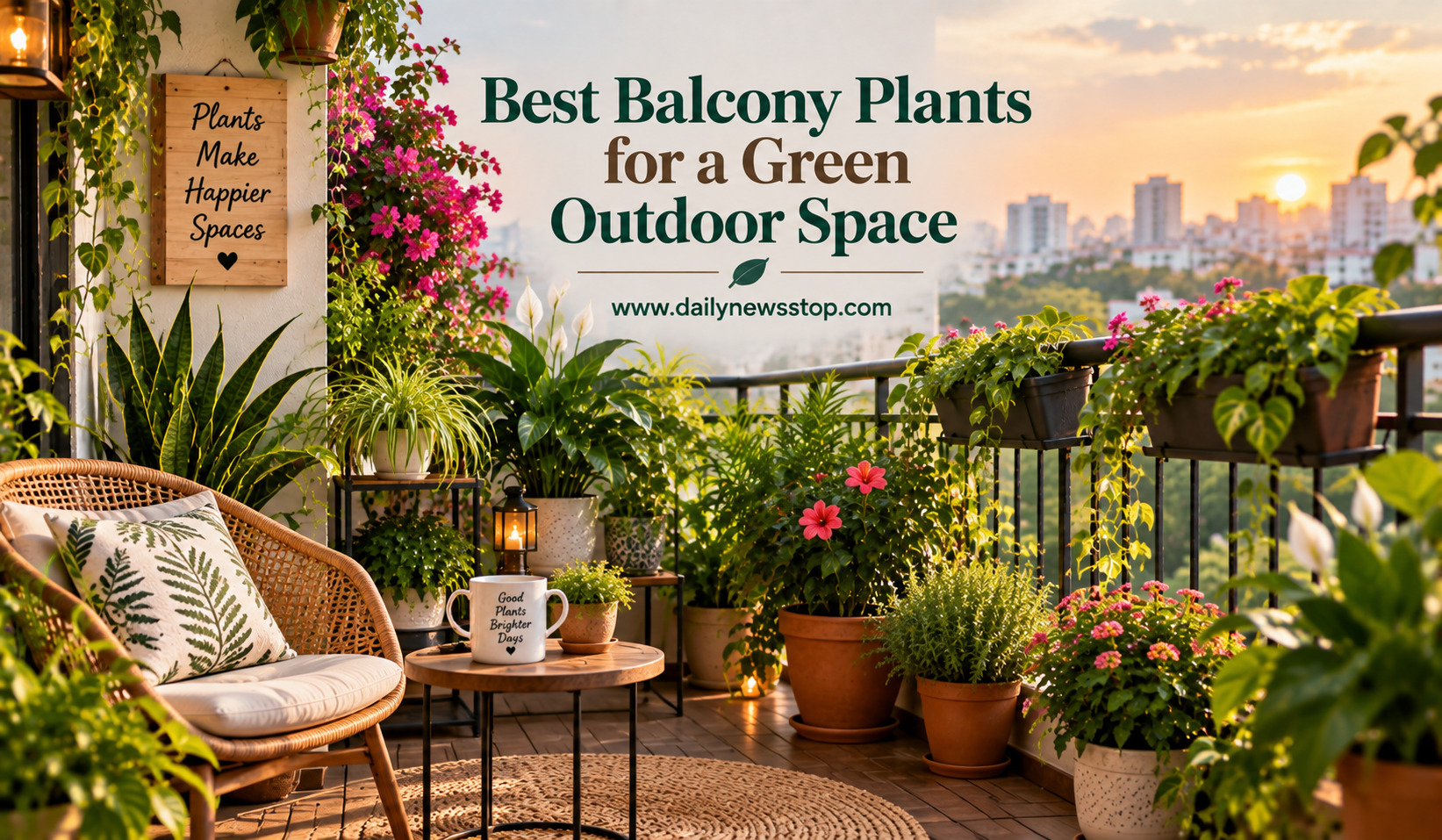
With the right selection of plants, you can transform an ordinary outdoor space into a refreshing area where you can relax, enjoy your morning coffee, or spend quiet evenings surrounded by nature. Plants not only improve the appearance of a balcony but also create a calming atmosphere by introducing natural textures, colors, and seasonal beauty.
Choosing the right balcony plants involves more than selecting attractive greenery. Factors such as sunlight, wind exposure, available space, and maintenance requirements all play an important role. By combining different plant types and arranging them thoughtfully, you can create a lush outdoor space that remains beautiful throughout the year.
Understand Your Balcony’s Growing Conditions
Before purchasing plants, observe your balcony for a few days. Notice how much sunlight it receives, whether it is exposed to strong winds, and how much protection it gets from rain. These conditions determine which plants are likely to thrive.
A south or west-facing balcony often receives more sunlight, making it suitable for many flowering plants and herbs. North-facing balconies usually receive less direct sunlight, making shade-tolerant foliage plants a better choice.
It is also important to consider available space. Compact balconies benefit from vertical gardening, while larger balconies can comfortably accommodate floor planters and seating alongside greenery.
Why Plants Are Perfect for Balcony Décor
Plants do much more than decorate a balcony. They soften hard architectural lines, create privacy, improve the overall atmosphere, and make outdoor areas feel more inviting.
A well-planned balcony garden can also help define different zones. Tall plants can frame a seating area, trailing plants can soften railings, and flowering plants can introduce seasonal color.
Even a modest collection of healthy plants can make a balcony feel significantly more comfortable and visually appealing.
Best Foliage Plants for Balcony Gardens
Foliage plants provide greenery throughout the year and create the foundation of most balcony gardens. Their leaves add texture and depth without depending on seasonal flowers.
Snake plants are valued for their upright structure and low-maintenance nature. Money plants create a softer appearance with trailing vines that look beautiful in hanging or elevated planters. Rubber plants offer large glossy leaves that make excellent statement pieces, while areca palms bring a tropical feel to larger balconies.
Choose foliage plants according to the light available on your balcony rather than selecting them solely for appearance.
Create Layers With Different Leaf Shapes
Combining plants with different leaf forms creates a richer display. Broad-leaf plants can be paired with slender upright varieties and trailing vines to add contrast.
This layered approach prevents the balcony from looking flat and helps each plant stand out individually.
Add Seasonal Color With Flowering Plants
Flowering plants introduce brightness and make a balcony feel lively throughout the growing season. They work particularly well when combined with green foliage.
Depending on your local climate and available sunlight, you may choose flowering plants that bloom during different seasons. Bright flowers can become focal points while surrounding foliage creates a calming background.
Instead of filling every planter with flowering plants, use them as accents throughout the balcony. This creates a balanced appearance that remains attractive even when individual plants are not in bloom.
Grow Fresh Herbs on Your Balcony
A balcony herb garden is both decorative and practical. Fresh herbs add greenery while providing ingredients for everyday cooking.
Popular choices include:
- Basil
- Mint
- Rosemary
- Coriander
- Thyme
Herbs often grow well in compact trough planters, making them suitable for narrow balconies. Group herbs with similar sunlight and watering needs to simplify maintenance.
Use Trailing Plants for a Lush Look
Trailing plants create movement by allowing stems to cascade naturally over the edges of pots and railings. They soften the straight lines of walls and balcony railings, making the space feel more natural.
Position trailing plants in hanging baskets, elevated planters, or railing containers so the foliage has room to grow downward.
Instead of placing several trailing plants together, spread them throughout the balcony to create balance.
Include Tall Plants for Structure
Tall plants help anchor a balcony design. They draw the eye upward and create a sense of enclosure without requiring walls or screens.
Place larger plants in corners where they do not block movement. A single tall plant can frame a seating area or provide privacy from neighboring balconies.
Avoid overcrowding the balcony with several oversized containers. One or two structural plants are often enough to create the desired effect.
Best Planters for Balcony Plants
The planter you choose is almost as important as the plant itself. Compact balconies benefit from containers that save floor space while providing adequate room for healthy root growth.
| Planter Type | Best For | Main Benefit |
| Railing planter | Flowers and herbs | Saves floor space |
| Hanging planter | Trailing plants | Adds vertical interest |
| Ceramic planter | Decorative foliage | Stylish appearance |
| Lightweight pot | Flexible arrangements | Easy to move |
| Vertical planter | Small plants | Maximizes wall space |
| Trough planter | Herbs and flowers | Organized planting |
Always ensure that planters include proper drainage to prevent water from collecting around plant roots.
Arrange Plants at Different Heights
One of the easiest ways to create a professional-looking balcony garden is by varying plant heights.
Place taller plants on the floor, medium-sized plants on stands, and smaller plants on shelves or railings. This layered arrangement allows every plant to remain visible while making the balcony appear fuller.
Avoid lining every planter along the same level. Height variation creates depth and makes the display feel more natural.
Balance Greenery With Open Space
While it may be tempting to fill every available corner with plants, leaving some empty space is equally important.
Open areas improve movement, make maintenance easier, and prevent the balcony from feeling cluttered. A balanced design usually looks more inviting than one packed with greenery.
Match Plants With Balcony Style
The style of your balcony should influence the plants you select.
Modern balconies often look best with simple foliage plants in neutral containers. Traditional balconies pair beautifully with terracotta pots, flowering plants, and natural materials. Bohemian spaces can combine trailing greenery with woven baskets and layered textures.
Choose planters that complement your furniture rather than competing with it. Repeating similar colors and materials helps create a cohesive appearance.
Create Privacy With Plants
Plants can naturally improve privacy without making a balcony feel enclosed.
Tall narrow plants, climbing varieties, and grouped foliage can soften views from neighboring buildings while maintaining airflow and natural light.
For maximum effect, combine structural plants with trailing greenery. This layered approach creates a living screen that changes beautifully as plants grow.
Caring for Balcony Plants
Healthy plants are the foundation of an attractive balcony. Regular maintenance helps greenery remain vibrant throughout the year.
Water plants according to their individual needs rather than following a fixed schedule. Check the soil before watering, especially during cooler months.
Remove dead leaves, clean dusty foliage, and rotate containers occasionally if plants receive sunlight from only one direction.
Feed plants with appropriate nutrients during active growth and repot them when they outgrow their containers.
Common Mistakes to Avoid
Many balcony gardens become overcrowded because too many plants are purchased at once. Start with a manageable collection and expand gradually.
Avoid placing sun-loving plants in shaded areas or shade-tolerant plants in intense afternoon sunlight. Every plant has specific environmental requirements.
Other common mistakes include using planters without drainage, ignoring mature plant size, and placing heavy containers where they obstruct movement.
A carefully planned balcony with fewer healthy plants almost always looks better than an overcrowded one.
Simple Tips for a Beautiful Green Balcony
Creating a lush outdoor space does not require expensive materials or complicated landscaping.
- Combine tall, medium, and trailing plants.
- Choose planters in matching colors or materials.
- Leave enough walking space between arrangements.
- Group plants with similar care requirements.
These simple principles help maintain a balcony that is both attractive and practical.
Frequently Asked Questions
1. Which plants are best for a balcony garden?
The best plants depend on sunlight and weather conditions. Foliage plants, herbs, flowering plants, trailing vines, and compact palms are all excellent choices when matched to the right environment.
2. How many plants should I keep on a small balcony?
There is no fixed number. Start with a few well-positioned plants and expand gradually. Vertical gardening and railing planters allow you to add greenery without reducing floor space.
3. Which balcony plants require less maintenance?
Plants such as snake plants, money plants, ZZ plants, and certain succulents are generally easier to maintain when placed in suitable growing conditions.
4. Can I grow herbs on my apartment balcony?
Yes. Herbs such as basil, mint, coriander, thyme, and rosemary can grow successfully in balcony planters provided they receive suitable light and regular care.
5. How can I make my balcony look greener?
Use plants at different heights, include trailing varieties, combine foliage with flowering plants, and use vertical planters or railing containers. A layered arrangement creates a fuller appearance without overcrowding the space.
Final Thoughts
A thoughtfully designed balcony filled with healthy plants can become one of the most relaxing areas of your home. By selecting plants that match your balcony’s sunlight, weather conditions, and available space, you can create a beautiful outdoor retreat that remains enjoyable throughout the year.
Mix foliage plants with seasonal flowers, add herbs for both beauty and practicality, and use trailing greenery to soften the overall design. Combine these with well-chosen planters and a layered arrangement to make even the smallest balcony feel lush and welcoming.
With regular care and careful planning, your balcony can become a refreshing green escape where nature and modern living come together beautifully.