
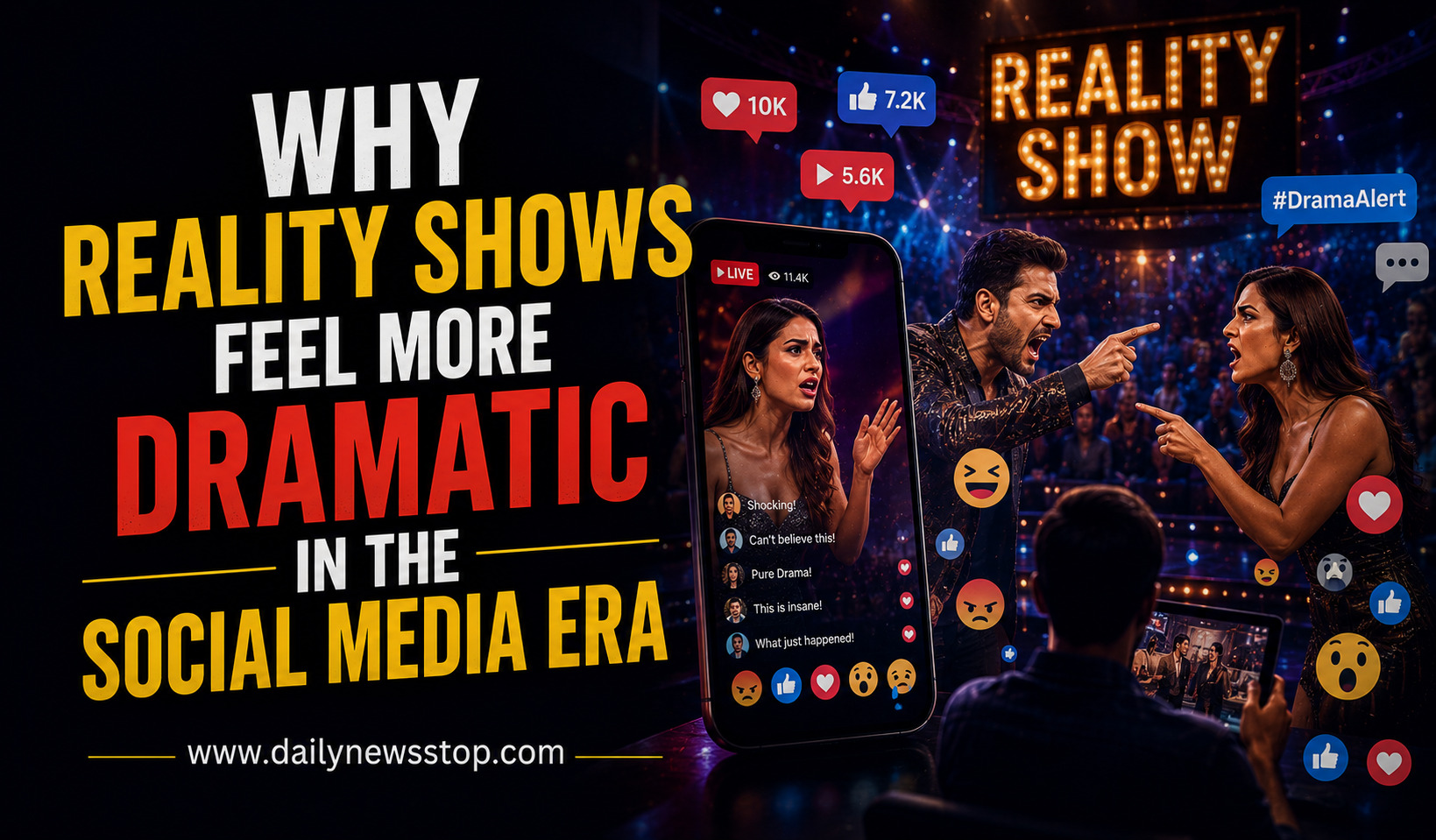
Reality shows have always depended on drama. Arguments, friendships, rivalries, emotional breakdowns, unexpected friendships, romances, eliminations, and surprising twists have been part of reality television for decades.
But something feels different about reality shows today.
A disagreement that once remained inside a television episode can now become a viral video within minutes. A contestant’s comment can trigger thousands of reactions. Fans can choose sides, create hashtags, make memes, defend their favourite contestants, and criticise others before the episode has even finished airing.
Social media has transformed reality television from something viewers simply watch into something they actively participate in.
This is one of the biggest reasons reality shows can feel more dramatic than they did in the past.
The drama is no longer limited to the screen. It continues across social platforms, fan communities, video channels, and online discussions.
Reality TV Was Always About Drama
Before discussing social media, it is important to remember that drama has always been central to reality television.
Reality shows are designed around human interaction. When different personalities are placed in the same environment, disagreements and emotional moments are naturally likely to occur.
Competition adds another layer.
Contestants may compete for money, popularity, immunity, or a chance to win the entire show. That pressure can create arguments and alliances.
Reality television producers also understand that emotionally intense moments keep viewers interested.
The difference today is that these moments no longer disappear when the episode ends.
Social media gives them a second life.
The Viral Clip Has Changed Everything
One of the biggest changes brought by social media is the rise of the viral clip.
A reality show episode may last an hour, but viewers may only see a particular argument or emotional moment circulating online.
A short clip can be shared thousands of times.
People who never watched the complete episode may see the clip and immediately form an opinion about what happened.
This can dramatically increase the visibility of a contestant or a particular storyline.
A small moment inside an episode can suddenly become the biggest talking point of the entire show.
Audiences Now React in Real Time
In the past, viewers generally watched a reality show and discussed it with friends or family afterward.
Today, the reaction can happen almost instantly.
While an episode is airing, viewers can post comments, reactions, memes, polls, and opinions online.
This creates a real-time conversation around the show.
Contestants are no longer performing only for the television audience. Their actions are also being interpreted by an online audience that can respond immediately.
This creates a much more intense environment.
A contestant might say something during an episode, and within minutes social media users could be debating whether the comment was funny, offensive, unfair, or misunderstood.
Fan Wars Have Become Part of Reality TV
Reality shows often divide audiences into groups.
Fans may strongly support one contestant while criticising another.
Social media amplifies these divisions.
Supporters can create fan pages, edit videos, defend contestants, and challenge criticism. Opposing groups may respond with their own posts and clips.
This can turn a television competition into a much larger online battle.
Sometimes the discussion becomes bigger than the actual show.
Contestants who receive strong support may gain followers and opportunities even after the programme ends.
This means social media popularity can become almost as important as performance within the show.
Hashtags Can Influence the Conversation
Hashtags have become an important part of reality television marketing and fandom.
When viewers repeatedly use a particular hashtag, it can increase the visibility of a contestant, argument, episode, or storyline.
Production teams and fan communities can encourage viewers to participate in these conversations.
A popular hashtag can make a show appear to be a major online event.
This creates a feedback loop.
More online discussion can attract more attention to the show, which brings in more viewers, which generates even more social media content.
Reality television therefore benefits from a relationship between television viewing and online engagement.
Contestants Are More Aware of Their Online Image
Modern reality-show contestants understand that their behaviour can have consequences beyond the programme.
They know that clips of their conversations may circulate online.
They also know that viewers may judge their behaviour based on short videos rather than complete episodes.
This awareness can influence how contestants behave.
Some may become more careful about what they say. Others may deliberately embrace a strong personality because they understand that memorable moments can increase visibility.
This creates an interesting question about the meaning of “reality” in reality television.
If contestants know they are constantly being watched and discussed online, can their behaviour still be considered completely spontaneous?
Producers Have More Content to Work With
Social media has also changed how producers understand audience reactions.
In the traditional television model, producers could rely on ratings and general audience feedback.
Now they can observe online conversations almost immediately.
They can see which contestants are receiving attention, which moments are being shared, and which storylines are generating discussion.
This does not necessarily mean that producers change the show based on every online reaction.
However, social media provides another source of information about what viewers are interested in.
It can influence promotional strategies, episode previews, digital content, and post-show discussions.
Drama Can Continue Between Episodes
One of the biggest advantages of social media for reality television is that the story does not have to stop when an episode ends.
A contestant’s interview can create a new controversy.
A behind-the-scenes clip can lead to speculation.
A social media post can create a new argument.
A fan theory can become a trending topic.
This means the audience can remain engaged throughout the week rather than only during scheduled episodes.
Reality shows have effectively become ongoing digital conversations.
Short-Form Content Makes Drama Easier to Consume
Another major factor is the popularity of short-form video.
Many people discover reality shows through short clips rather than full episodes.
A dramatic confrontation can be reduced to a one-minute video that is easy to watch and share.
This creates a new form of entertainment consumption.
People may know a contestant’s most controversial moment without watching the entire series.
Short-form content therefore acts as both promotion and commentary.
It can attract new viewers while also reinforcing existing fan communities.
Social Media Can Make Small Moments Look Bigger
There is also a downside.
A short clip can remove important context.
A conversation that lasted twenty minutes may be reduced to a few seconds. A joke may appear serious when the surrounding discussion is removed. A disagreement may look one-sided because viewers only see one person’s response.
This can make reality-show drama feel more extreme than it actually was.
The internet rewards content that generates strong reactions.
Calm conversations rarely become viral.
Arguments, emotional moments, surprising statements, and controversial incidents are much more likely to be shared.
As a result, viewers may see a disproportionate amount of dramatic content.
The Business Value of Controversy
Drama can also have commercial value.
A controversial moment creates discussion.
Discussion creates visibility.
Visibility can increase interest in the show.
For television networks and streaming platforms, this attention can be valuable.
This does not mean every controversial moment is artificially created. Reality shows contain genuine conflicts and emotional situations.
However, producers know that dramatic moments can generate publicity.
The relationship between entertainment and social media therefore creates strong incentives to highlight memorable conflicts.
Reality Stars Can Build Careers Through Social Media
Social media has also changed what happens after a reality show ends.
Previously, a contestant’s popularity might fade after the season concluded.
Today, contestants can build their own online audiences.
They can create content, collaborate with brands, appear in music videos, participate in interviews, and remain connected with fans.
A reality show can therefore become the beginning of a personal brand rather than simply a television appearance.
This gives contestants another reason to pay attention to their public image.
The Audience Has Become Part of the Show
Perhaps the biggest transformation is that viewers are no longer passive.
They can vote, comment, create fan edits, debate contestants, make memes, share clips, and influence online popularity.
In some formats, audience voting can directly affect the outcome of a competition.
Even when viewers do not have formal voting power, their online reactions can influence the popularity of contestants.
The boundary between the programme and its audience has therefore become increasingly blurred.
Are Reality Shows Actually More Dramatic?
The answer depends on what we mean by “dramatic.”
Reality shows may not necessarily contain more conflict than they did in the past.
What has changed is the visibility and speed of the drama.
Previously, a dramatic moment might be watched by the show’s audience and then forgotten.
Today, the same moment can be clipped, shared, discussed, remixed, criticised, defended, and turned into a meme.
The original moment may last five minutes.
Its online life can last for days.
That makes the drama feel much larger.
The Future of Reality Shows in the Social Media Era
Reality television is likely to become even more connected to social media.
Future shows may increasingly combine traditional episodes with digital content, behind-the-scenes videos, interactive voting, live discussions, contestant updates, and social-media-based storytelling.
Contestants may also enter shows with established online audiences, creating an interesting relationship between television fame and digital fame.
At the same time, audiences may become more aware of how reality television is produced.
As viewers become more media-literate, they may question editing choices, promotional strategies, and the way certain conflicts are presented.
This could encourage producers to find new ways to create engaging stories without relying entirely on controversy.
Conclusion
Reality shows feel more dramatic in the social media era because the drama no longer ends when the episode ends.
A single argument can become a viral clip. A contestant can gain thousands of supporters overnight. Fans can create online rivalries, hashtags can dominate conversations, and viewers can respond to events almost instantly.
Social media has effectively expanded the stage of reality television.
The biggest change is not necessarily that reality shows have become more dramatic. It is that their drama has become more visible, faster, more interactive, and more difficult to escape.
For audiences, this can make reality television more exciting and engaging. But it also means viewers need to remember that short clips rarely tell the entire story.
As television and social media continue to merge, reality shows will increasingly depend on both the episode being watched on screen and the conversation happening around it online.
The future of reality television may therefore be less about simply asking, “What happened on the show?”